

You probably know the feeling. Your body is finally resting, but your mind refuses to slow down. Your shoulders stay tense. Your jaw feels tight. You're exhausted all day, only to find yourself wide awake the moment your head touches the pillow. Everyday challenges suddenly feel heavier than they should.
This isn't simply a matter of willpower. For many people, it's a nervous system that has become stuck in a constant state of stress, something that has become increasingly common in today's fast-paced world.
Grounding offers a promising way to help restore that balance. More importantly, researchers have measured its effects using heart rate variability, muscle tension, skin conductance, and other markers of nervous system function. Here's what science has revealed.
Your Body's Built-In Stress Response
Your autonomic nervous system controls the functions you never have to think about: your heartbeat, breathing, digestion, hormones, and immune system.
It has two natural states. One prepares you to respond to stress by increasing your heart rate, tightening your muscles, and releasing stress hormones. The other helps your body slow down, digest, heal, and recover. Ideally, your body moves effortlessly between the two.
The problem is that modern life keeps many of us in a constant state of stress. Emails, deadlines, traffic, financial pressures, and endless notifications trigger the same biological response that once protected us from real danger.
When your body rarely has the opportunity to fully relax, sleep, recovery, and healing begin to suffer. Over time, chronic stress can also contribute to ongoing inflammation.
This is where grounding may help. Research suggests it can support a healthier nervous system, allowing the body to shift back into the calm, restorative state where healing naturally occurs.
What Happens When You Ground? Here's What Researchers Measured.
Researchers wanted to know whether grounding could actually influence the nervous system, not just how people felt, but what changed inside the body.
Here's what they found.
Your body begins responding almost immediately. In some studies, researchers measured changes within just one to two seconds of making contact with the Earth. Breathing became calmer, muscle tension decreased, and the nervous system began shifting toward a more relaxed state, before participants even knew they were grounded.
Your nervous system becomes more resilient. Studies measuring heart rate variability, one of the best indicators of nervous system health, found that grounding helped the body move away from "fight or flight" and toward "rest and restore." This calmer state is associated with better stress resilience, improved recovery, and healthier cardiovascular function.
Even babies responded. In one remarkable study, researchers grounded premature infants in a neonatal intensive care unit. The babies showed improvements in vagal tone, a key marker of a healthy, balanced nervous system. Because newborns have no expectations or beliefs about grounding, these results suggest the body responds naturally to the Earth's connection.
Stress hormones found a healthier rhythm. People who slept grounded experienced healthier cortisol patterns, with levels falling naturally at night as they are meant to. This supports deeper sleep, better recovery, and a more balanced stress response.
People simply felt better. In a sham-controlled study, participants who were grounded reported noticeable improvements in mood after just one hour compared with those who were not.
Taken together, these studies suggest that grounding does more than help us feel relaxed. It appears to support the nervous system in returning to the calm, restorative state where the body is designed to heal, recover, and thrive.
Why Does Grounding Affect the Nervous System?
Your body is naturally electrical and so is the Earth. When your bare skin touches the ground, whether it's grass, soil, sand, or an indoor grounding product, your body reconnects with the Earth's natural electrical energy.
Researchers believe this connection may support the body in two important ways. First, the Earth provides a steady supply of free electrons that may help neutralize excess free radicals, reducing oxidative stress and supporting the body's natural inflammatory response.
Second, grounding appears to help the nervous system settle into a calmer, more balanced state. As inflammation decreases and the body reconnects with its natural electrical environment, the "fight-or-flight" response may ease, allowing the body to shift into the restorative mode where healing and recovery take place.
From an evolutionary perspective, this makes sense. For thousands of years, humans lived in direct contact with the Earth every day. We walked barefoot, slept on the ground, and spent our lives outdoors. Constant contact with the Earth's natural energy was simply part of being human.
Today, insulating shoes, modern buildings, and indoor lifestyles have dramatically reduced that connection. Grounding is a simple way to restore what nature once provided every day.
While grounding is not a treatment for anxiety or any medical condition, it can be a valuable wellness practice that supports your body's natural ability to relax, recover, and maintain balance. It works best alongside healthy lifestyle habits and appropriate medical care when needed.
Bringing Grounding Into Your Daily Routine
Supporting your nervous system doesn't have to be complicated. Simple habits like slow, intentional breathing, spending time in nature, taking unhurried walks, and getting quality sleep all help shift the body into its calm, restorative state. Grounding naturally complements these practices.
Unlike many wellness habits that require your time and attention, grounding can work quietly in the background. Whether you're walking barefoot outdoors or sleeping on a grounding mattress cover, your body remains connected to the Earth's natural energy while it does what it was designed to do: rest, recover, and restore balance.
Sometimes the most powerful wellness practices aren't about doing more. They're about reconnecting with what has been supporting us all along.
The grounding mattress cover keeps you connected for seven to nine hours nightly, the longest continuous window your body has for rest and repair.
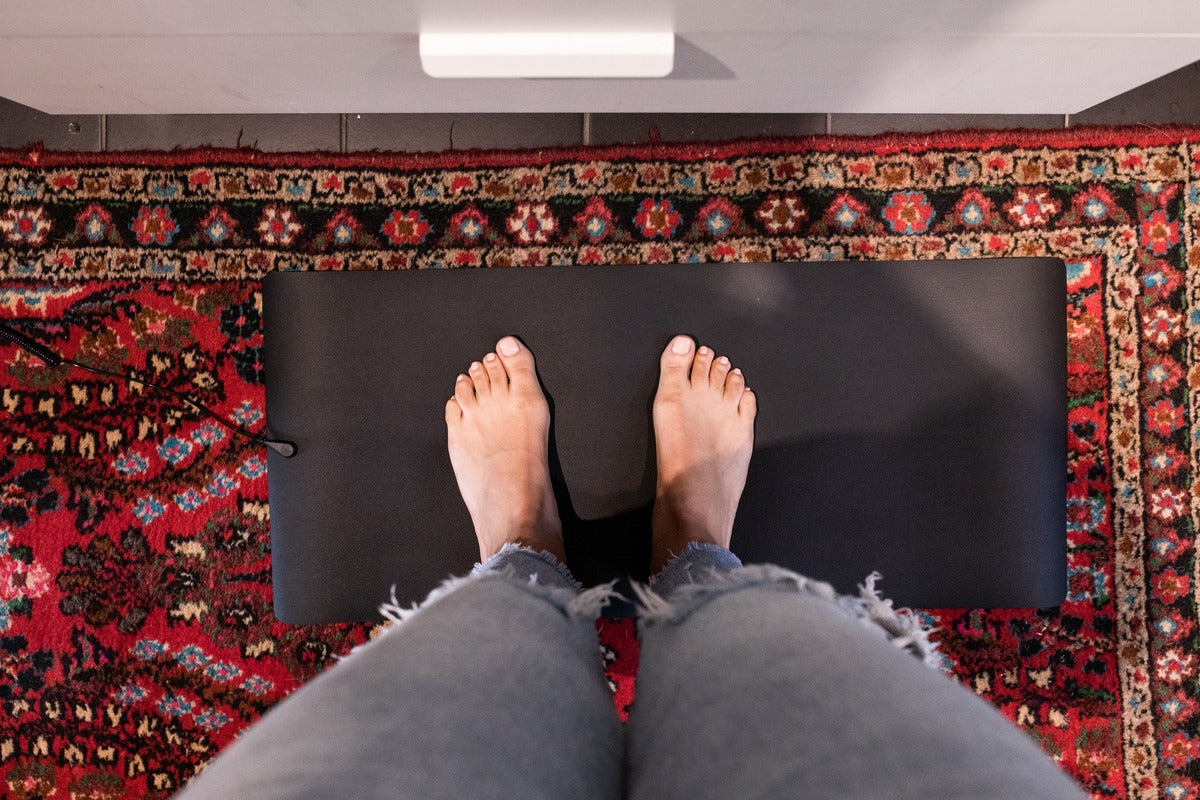
Grounding mats ground you during the day at a desk or on the couch, which is often when the accelerator is jammed hardest.
Grounding accessories such as bands and pillow covers extend the connection to travel and targeted use.
Outdoors, thirty minutes barefoot on grass, soil, sand, or unsealed concrete grounds you completely and costs nothing. Combine it with a walk and you stack two parasympathetic inputs at once.
Test your outlet with a plug-in checker before your first night to confirm the grounding port is live.
Frequently Asked Questions
Can grounding help with anxiety?
Grounding is not a treatment for anxiety. Research does show that it shifts the autonomic nervous system toward parasympathetic tone and improves mood scores, and many people report feeling calmer and less reactive. If you are managing anxiety, work with a healthcare professional and treat grounding as a complementary practice.
How fast does grounding calm the nervous system?
Instrument readings change within seconds of contact. The felt sense of calm varies, with some people noticing it in the first session and others recognizing it only after a couple of weeks of consistent grounding.
What is heart rate variability and why does it matter here?
It measures the small timing differences between heartbeats. Higher variability means your nervous system can shift between gears and adapt, which tracks with better stress resilience and cardiovascular health. Grounded participants showed improved variability, indicating a move toward the rest-and-repair side.
Is grounding better than breathing exercises for stress?
They work differently and pair well. Breathing techniques give you deliberate control in a stressful moment. Grounding runs continuously in the background, including through the night, without asking for your attention.
Will grounding keep me awake if it energizes me?
Grounding shifts you toward the parasympathetic state, so it tends to support sleep rather than interfere with it. A small number of people feel unusual sensations during the first few nights while adjusting, which typically settles within a week.
Give Your Nervous System Somewhere to Land
An overactive nervous system does not calm down because you tell it to. It responds to inputs, and the earth has been one of those inputs for as long as humans have existed.
Earthing.com is the brand Clint Ober founded after his own grounded night convinced him the connection was worth studying. Explore the grounding collection and give your body a way back to the brake.

Leave a comment
This site is protected by hCaptcha and the hCaptcha Privacy Policy and Terms of Service apply.