

Grounding is one of the very few wellness practices where the starting point costs nothing.
You don't need a mat to walk barefoot on damp grass. You don't need a sleep system to stand in wet sand at the beach. You don't need an accessory, a subscription, an app, or a single piece of equipment to sit with bare skin touching the earth.
That matters, because grounding products can make the practice far easier to keep up indoors, but they're not what makes grounding possible in the first place. The original idea is simpler than that. Direct skin contact with a conductive natural surface connects you electrically to the earth. A product is a way of recreating that connection when modern life makes direct contact inconvenient.
So if money is tight, don't start by asking which five grounding products to buy. Start with what you can do for free. Then, if grounding becomes something you want to keep, spend only where it removes the biggest barrier.
That's the whole philosophy of Earthing on a budget.
The Cheapest Grounding Product Is the Ground Outside
Outdoor grounding isn't the budget version of the practice. It's the original version.
Bare skin on appropriate natural surfaces like grass, soil, sand, or natural water gives you direct earth contact without buying anything. As we covered in the previous articles, moisture generally improves conductivity, which is why damp grass, moist soil, wet beach sand, and seawater are especially useful.
So an inexpensive grounding routine can be as simple as slipping your shoes off for part of a walk through the garden, spending a little time barefoot on the lawn, gardening with your hands in the soil, or wandering along the wet sand when you're already at the beach.
There's no need to turn any of that into another scheduled wellness protocol. If you already sit outside with your coffee in the morning, take your shoes off. If you already cross the garden, do part of it barefoot when conditions are safe. If you already go to the beach, walk a little closer to the shoreline.
The easiest free habit is almost always one attached to something you already do.
Free Grounding Has One Major Limitation: Real Life
If outdoor grounding were always convenient, there'd be much less reason for indoor grounding products to exist. The problem isn't that the earth stops working. It's that life gets in the way.
You spend most of the day indoors. You work at a computer. It's raining. Winter arrives. You live in an apartment several floors up. The garden freezes. It gets dark early. You're wearing shoes. Or you simply don't want to build your day around finding an appropriate patch of grass.
Indoor Earthing products solve that by bringing the connection into the places where you already spend hours. That's what you're really paying for. Not access to something the earth charges for. Convenience.
If You Buy One Product, Buy for the Time You Already Have
This is probably the most important budget principle in this whole article.
Don't buy the product that sounds most impressive. Buy the one that fits the largest block of time already built into your day.
Someone who spends eight hours at a desk has an obvious opportunity. Someone who wants to ground while sleeping has another. Someone who moves between rooms, travels often, or wants one product for several uses has a different need again.
So the best first purchase isn't universally the biggest or priciest setup. It's the one you'll actually touch, consistently. That makes usage a better budget metric than price alone. A cheaper product left in a cupboard is expensive. A product used for hours every day may deliver far more real value even if it costs more up front.
The Universal Mat Is the Lowest-Cost Full Earthing Setup for Most People
For someone who wants to start indoors without buying a full sleep system, the Universal Mat is the obvious place to look.
Earthing currently describes it as its most versatile product and specifically says that if you're buying only one grounding product, the Universal Mat is the one it recommends. The kit includes the mat, Coil Cord, Safety Adapter, and Outlet Checker you need for a standard outlet-based setup. Earthing
What makes it work as a budget option is flexibility. Slide it under bare feet while you work. Use it on the couch. Position it where your hands or forearms rest. Carry it from room to room. You're buying one conductive contact point rather than a product dedicated to one narrow slice of the day.
That makes it especially good for someone who's curious about indoor grounding but isn't ready to invest more heavily yet.
Start With One Mat Before Building a Whole Grounding House
It's easy to look at a product range and start designing the perfect system on the spot. Sleep product. Desk mat. Pillow cover. Travel setup. Yoga mat. A second mat for the other room.
You don't need to begin there.
Grounding isn't improved simply because you own more grounding products. Once your body has a working conductive pathway to the earth, adding three more products at the same moment doesn't make you "four times more grounded."
The practical advantage of multiple products is that they create more opportunities for contact across different parts of your routine. That can be useful later. It isn't necessary on day one.
Start with one setup. Use it. See whether it slips naturally into your life. Then identify the next actual problem before spending more money. Maybe there isn't one.
If Sleep Is the Priority, Spend There First
For many people, the strongest argument for a sleep product isn't that sleep grounding is automatically superior to every other form. It's that sleep gives you a large block of uninterrupted time that requires zero extra scheduling. You were going to be in bed anyway.
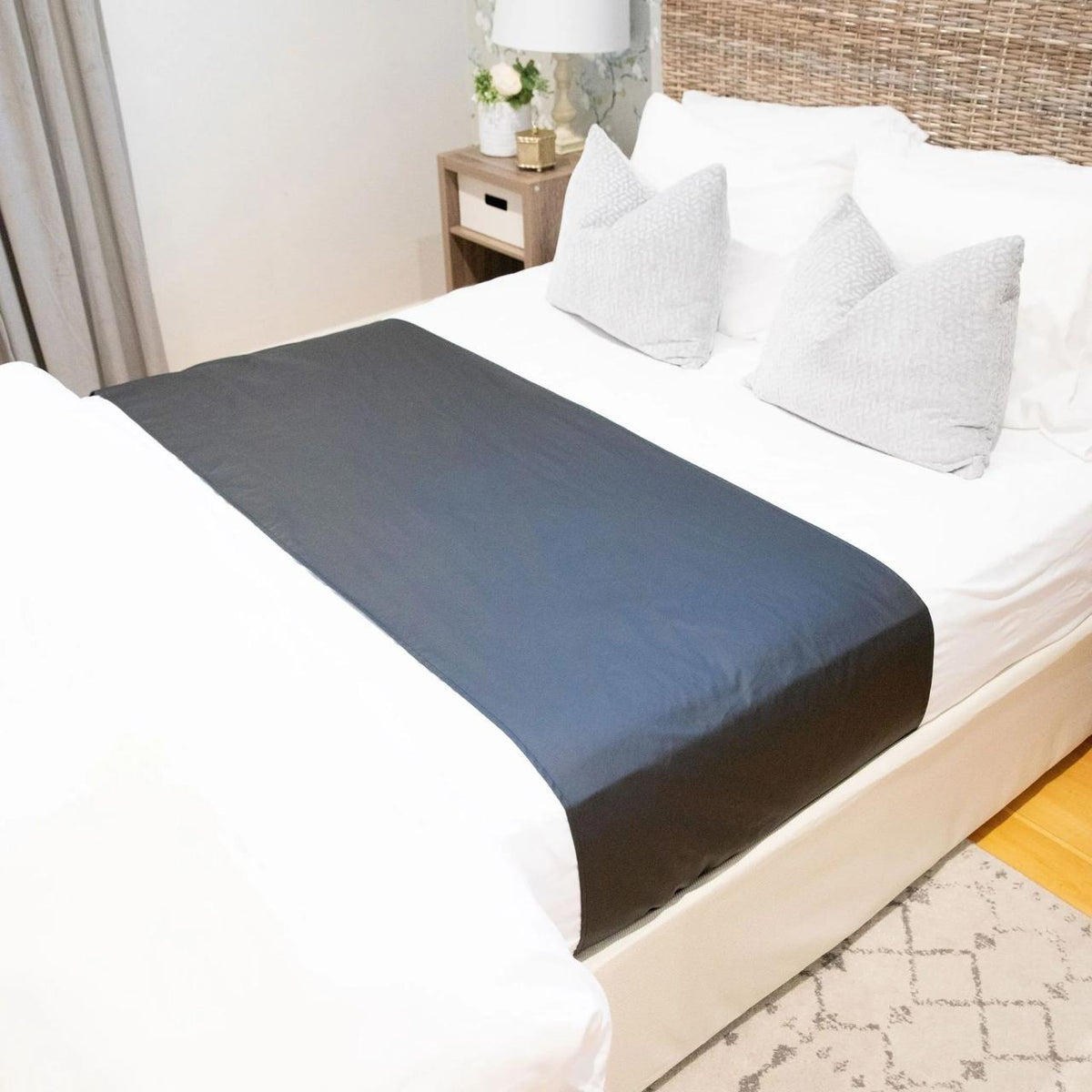
Earthing's current Sleep Mat works on any mattress size and can be positioned horizontally or vertically, which also makes it more flexible than jumping straight to a full mattress-sized cover. The current kit includes a Product Tester along with the components needed to connect it. Earthing
That makes the Sleep Mat a logical second budget tier. It costs more than the Universal Mat, but if your main goal is overnight grounding, it may make more sense to skip the daytime option and put the budget directly into the part of your routine you care about most.
Again, price is only half the calculation. Use is the other half.
You Do Not Need the Largest Mattress Cover to Start Sleeping Grounded
A full Mattress Cover can be a real convenience, especially for couples or for anyone who migrates across the bed all night. But it isn't the only way to ground overnight.
The Sleep Mat exists specifically to give you a smaller conductive area that works across mattress sizes. That distinction matters when budget is part of the decision. You don't need to pay for a large conductive surface simply because your mattress is large. You need sufficient, reliable contact.
If a smaller Sleep Mat provides that, it does the fundamental electrical job without the highest-cost bed setup. Upgrade because the larger surface solves a practical problem for you, not because you assume the smaller product gives you "less grounding."
Do Not Buy Accessories You Already Have
Another easy way to overspend is buying setup components you already own.
Different Earthing kits include different accessories. The Universal Mat Kit, for example, currently includes its Coil Cord, Safety Adapter, and Outlet Checker. The current Sleep Mat also bundles the relevant connection equipment and includes a Product Tester. Earthing
Before adding an extra checker, adapter, cord, or tester to an order, check what's already in the box. That matters even more if you add another Earthing product later, because you may already have what you need to verify the outlet or the product.
The accessories all have useful jobs. Duplicates you didn't need are just duplicate spending.
Do Not Confuse Cheap With Good Value
Budget-conscious doesn't mean grabbing the lowest-priced conductive-looking thing you can find online.
A grounding product has a very specific job: provide a reliable conductive surface and a safe, verifiable connection to earth. That's why testing matters. A product that costs half as much but gives you no reliable way to verify conductivity can be poor value if you spend the next year wondering whether it works.
The same goes for improvised setups. There are endless instructions online for homemade grounding devices using wires, clips, foil, conductive fabrics, and electrical outlets. This is not where saving money makes sense. Household electrical grounding shouldn't become a DIY experiment.
If an indoor product connects through the electrical grounding system of a building, use equipment designed for that purpose and verify that the outlet is correctly grounded. Saving money is smart. Saving a few dollars by improvising around household wiring is not.
The Outlet Checker Is Not an Optional Detail
One of the smartest things you can do with a limited budget is make sure the product you already bought has a real ground to connect to.
An outlet can accept a grounded plug and still lack a functioning ground. So before assuming a grounding product failed, verify the outlet. Many Earthing kits include the relevant Outlet Checker precisely because the look of an outlet tells you nothing.
This matters most for budget-conscious buyers, because misdiagnosing an ungrounded outlet leads straight to unnecessary spending. You think the mat is broken. You buy another. You get the same result. Then you discover the actual problem was in the wall.
Verification protects both the grounding connection and your wallet.
Maintain What You Buy
Product lifespan is part of product cost. Damage a conductive mat through unsuitable cleaning and the cheapest purchase quickly becomes the expensive one, because now you're replacing it.
As we covered in Articles 116 and 117, Earthing's current carbon-based mats and covers should be cleaned gently with a damp cloth and, when needed, a small amount of mild soap followed by a clean damp wipe. They shouldn't be machine washed, tumble dried, bleached, coated with oils, or cleaned with aggressive chemicals. Heavy lotion and body-oil residue should also be kept from building up on the conductive surface.
Proper care costs almost nothing. Replacing a product that was damaged unnecessarily does. Treat maintenance as part of your budget strategy.
Test Before You Replace
The same principle applies when an older product seems to stop working. Don't rush out and buy another one. Work through the chain.
Check the outlet. Reconnect the Safety Adapter and Coil Cord. Test the cord if you need to. Check the Product Tester battery. Clean the conductive surface appropriately. Test several areas of the product.
As Article 118 covered, one component can fail while the rest of the system stays perfectly usable. A replacement cord costs far less than replacing an entire sleep setup. Troubleshooting first isn't only technically smarter. It's cheaper.
Use Outdoor Grounding and Indoor Products Together
Budget grounding doesn't have to be a choice between free outdoor contact and purchased indoor contact. The most practical approach combines both.
When the weather is good, use the ground outside. When you're at the beach, use the shoreline. When summer gives you long evenings, spend more of them barefoot. Then let your indoor product fill the gaps.
Winter arrives? Use the mat. Long day at the computer? Use the mat. Rain all weekend? Use the sleep setup.
That way, one indoor product doesn't have to replace every other grounding opportunity. It becomes your reliable fallback. It's a far more efficient way to think about spending, because you're not trying to buy a product for every moment of the day. Nature still does part of the work for free.
A Starter Kit Can Make Sense Later, Not Necessarily First
Earthing currently offers a Starter Kit that combines several of its core products, including sleep and daytime grounding options plus testing equipment. Earthing
Bundles can offer better value when you already know you want multiple products. That's different from saying a beginner needs the bundle.
If you're not sure yet whether indoor grounding will become part of your routine, buying everything at once costs more money before you've learned anything about your own habits. A single Universal Mat or Sleep Mat answers the more important question first: will you actually use it?
If the answer is yes, and you later want a permanent daytime and nighttime setup, then comparing the bundle with buying products separately makes sense. Buy around demonstrated use, not imagined use.
Take Advantage of the Trial Period Instead of Guessing Forever
Budget decisions get easier when you know what happens if a purchase doesn't work out.
Earthing's current return policy provides a 45-day return window on non-clearance products, subject to the policy conditions, and its current site also states a one-year manufacturer's warranty. Earthing
That doesn't guarantee a particular health outcome. Earthing itself explicitly states that it guarantees the grounding connection, not how an individual will respond to grounding. Earthing
But from a purchasing point of view, the return window lets you actually use the product in your normal routine instead of staring at reviews for another month trying to predict what will happen. Set it up correctly. Verify the connection. Use it consistently. Then make your own decision.
Do Not Spend Money Chasing Stronger Grounding
This deserves its own section, because it's such an easy trap.
A more expensive product isn't necessarily giving you a "stronger dose" of grounding. Larger products provide larger contact areas. Different products fit different situations. More products create more chances to stay connected. Those are practical advantages.
But once you've established a working conductive pathway between your body and the earth, the basic condition is there. So don't keep buying because you think the next product unlocks a higher level of connection. Buy because it solves a real, everyday problem.
That keeps both the practice and the spending grounded in something measurable.
Frequently Asked Questions
Can You Ground Without Buying Anything?
Yes. Bare-skin contact with suitable earth-connected surfaces like damp grass, soil, wet sand, and natural bodies of water can provide direct grounding with no equipment at all.
What Is the Cheapest Way to Start Grounding?
Start outdoors, for free. If you want an indoor setup, choose one product based on where you can rack up the most consistent contact, rather than trying to build a complete system right away.
If I Buy Only One Earthing Product, Which Type Makes the Most Sense?
For broad flexibility, Earthing currently positions the Universal Mat as its most versatile option and specifically recommends it when someone is buying only one product. If your priority is purely overnight grounding, the Sleep Mat may make more practical sense. Earthing
Do I Need a Full Mattress Cover to Sleep Grounded?
No. A Sleep Mat provides a smaller conductive surface that can be positioned horizontally or vertically on any mattress size. A full Mattress Cover is mainly a larger, more convenient contact area. Earthing
Do I Need a Separate Grounding Product for Every Room?
No. A portable Universal Mat can move between rooms with you. Multiple products become useful when you value the convenience of leaving permanent setups in different places.
Is It Worth Buying Cheap Grounding Products From Unknown Brands?
Price alone doesn't tell you whether a grounding product is good value. Look for a verifiable conductive surface, appropriate safety design, clear setup instructions, and a way to confirm the connection, rather than relying on marketing claims.
Can I Build My Own Grounding Device?
Improvising equipment that connects to household electrical systems isn't a sensible place to cut costs. Use properly designed grounding equipment and verify the building ground instead of experimenting with wiring.
Should I Buy a Starter Kit Immediately?
Not necessarily. A bundle can make sense if you already know you want several grounding products. If you're still finding out whether grounding fits your life, starting with one well-chosen product keeps the initial commitment small.
Start Free, Then Pay for Convenience
Grounding doesn't become more legitimate when money changes hands. The grass doesn't ask for a credit card. Neither does the beach.
If you have safe access to conductive natural ground and the weather cooperates, start there. Then notice where the practice breaks down. Maybe winter makes outdoor contact unrealistic. Maybe you work indoors all day. Maybe you'd rather use your sleeping hours than carve one more activity into an already full schedule.
That tells you what to buy. Not a wish to own every grounding product on the shelf.
For one person, a Universal Mat may solve almost everything. For another, it makes more sense to go straight to a Sleep Mat. Someone who already knows they want both daytime and nighttime setups may find the Starter Kit more economical. There's no rule that says everyone ends up with the same setup.
The budget approach is simpler than any of that. Use the earth when it's available. Buy one product when convenience becomes the barrier. Verify that it works. Look after it. Add something else only when there's a real reason.
The original premise of grounding was never expensive. Modern products simply make it easier to hold on to that connection when modern life gets in the way.

Leave a comment
This site is protected by hCaptcha and the hCaptcha Privacy Policy and Terms of Service apply.