
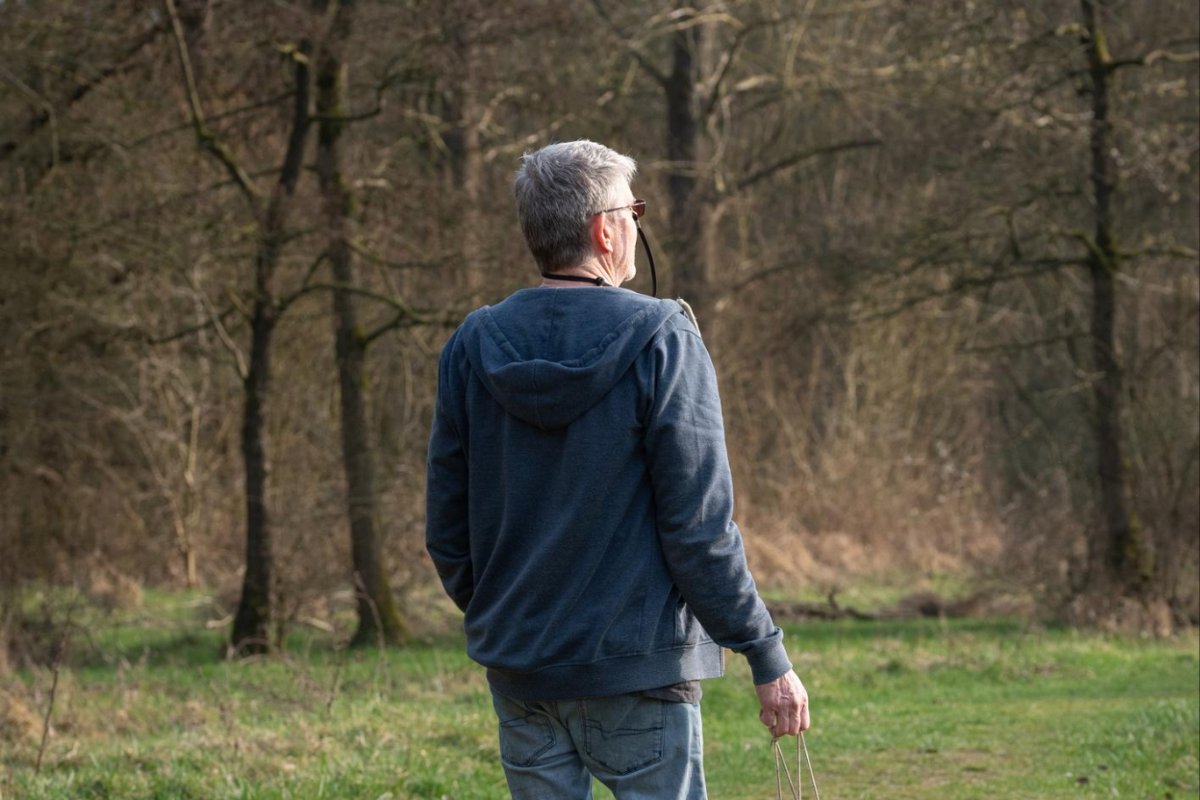
Aging rarely announces itself. It edits.
Sleep gets lighter a few minutes at a time. A hard day in the garden takes two days to leave your legs instead of one. Nothing dramatic happens on any particular morning, and then one year you notice the distance between what you did and how long it took to come back.
Most of what people call resilience is really recovery, running quietly underneath everything else. Here is what changes in sleep and recovery as the years add up, what researchers have measured in people who spend long hours grounded, and where grounding for healthy aging honestly sits among the things that matter more.
What Changes First: Sleep Gets Lighter
The hours are not usually the problem. The depth is.
Slow-wave sleep, the deepest stage and the one that does most of the physical repair, tends to shrink with age. Sleep also becomes easier to interrupt. A car door, a full bladder, a shoulder that has opinions about the mattress, and you are awake at three in the morning doing arithmetic about how much of the night is left.
Timing shifts too. Many people get tired earlier in the evening and wake earlier in the morning, and the cortisol rhythm that once rose and fell in a clean curve tends to flatten.
The result is a night that looks fine on paper and does not feel fine. Seven hours of shallow, broken sleep is not seven hours of sleep, it is seven hours of trying. That gap is where most of the tiredness people blame on age actually lives.
Recovery Slows, and Everything Sits on Recovery
The second change is speed. Muscle repair takes longer, and delayed-onset muscle soreness, the ache that arrives a day after the effort rather than during it, sticks around longer than it used to.
Underneath that sits chronic low-grade inflammation, a low background hum that never quite switches off. It is not the dramatic kind that arrives with an injury. It is the kind that makes a knee complain on the stairs.
Here is the part that matters most.
Slower recovery quietly shrinks what you are willing to do. You skip the second walk because the first one is still in your legs, you lift less because the soreness lasted three days last time, and the loss of activity does more damage over a decade than the soreness ever did. Recovery is not a comfort issue, it is a capacity issue.
Grounding for Healthy Aging: What Researchers Have Measured
Start with sleep, because that is where the evidence is strongest and most current.
An independent team compared a grounding mat against an identical mat connected to nothing, used for several hours a night across roughly a month. Neither the participants nor the researchers knew which mat was which. Sleep quality improved in the grounded group, and so did daytime sleepiness and everyday stress. A wrist monitor that estimates sleep from movement showed total sleep time increasing as well.
Earlier work pointed the same way. Researchers tracking cortisol in people who slept grounded in their own beds over a stretch of weeks saw night-time levels fall and the daily pattern move back toward its natural shape, alongside reports of better sleep and less pain. Researchers measuring heart rate variability, a key indicator of nervous system health, found that grounding helped participants move toward the calmer, restorative state.
Recovery has been looked at too. Participants who exercised their calves hard enough to bring on soreness, then slept grounded, reported less pain at one, two, and three days than a group sleeping on an identical system that was quietly disconnected. They also tolerated more pressure on the calf before saying it hurt.
These studies are small, and none were run specifically in older adults, so nobody can tell you the effect is identical at seventy-five. What carries over is that sleep depth and recovery speed are the same underlying processes at any age, they simply have less margin later on. The recent sleep work is the exception that matters most, independent of the original researchers and compared against a convincing sham.
The Most Directly Measured Piece
Blood is where the clearest single measurement in this field comes from.
Red blood cells carry a surface charge that keeps them repelling each other and moving freely. When that charge drops, cells clump and blood moves more thickly than it should. Researchers took samples before and after just two hours of grounding and found the surface charge rising and the clumping falling.
That is one small study, and it measured blood in a dish rather than anything about how long people live. What makes it valuable is directness. Nobody is inferring circulation from a questionnaire here, the change was visible under a microscope.
Why it might happen is still a proposal rather than a demonstrated fact. A review by James Oschman, Gaétan Chevalier, and Richard Brown in the Journal of Inflammation Research suggested that free electrons from the earth's surface may act as antioxidants, neutralizing reactive oxygen species, the reactive molecules that damage tissue when antioxidants run short. Plausible, and not established.
One boundary is worth naming plainly. Nothing in this research speaks to disease, memory, cognition, or how long anyone lives. Sleep and recovery are what has been measured, and sleep and recovery are what should be claimed.
Where Grounding Sits Among the Things That Matter
Honesty is more useful here than enthusiasm.
If you ranked everything that protects sleep, recovery, and resilience over a decade, grounding would not be at the top. Resistance training would. So would daylight in the first hour of the morning, a consistent sleep and wake time, enough protein, and people who expect to see you on Thursday.
Grounding is a small input that stacks on top of those, not a substitute for any of them. That is not a reason to skip it. Small inputs that require no willpower and happen while you are asleep are exactly the kind that survive a busy decade, and most of the ambitious ones do not.
Grounding is a complementary wellness practice that supports the body's natural balance. It is not a treatment for any medical condition, and it belongs alongside your existing care.
Making Contact Simple at Any Age
The free version works and always has.
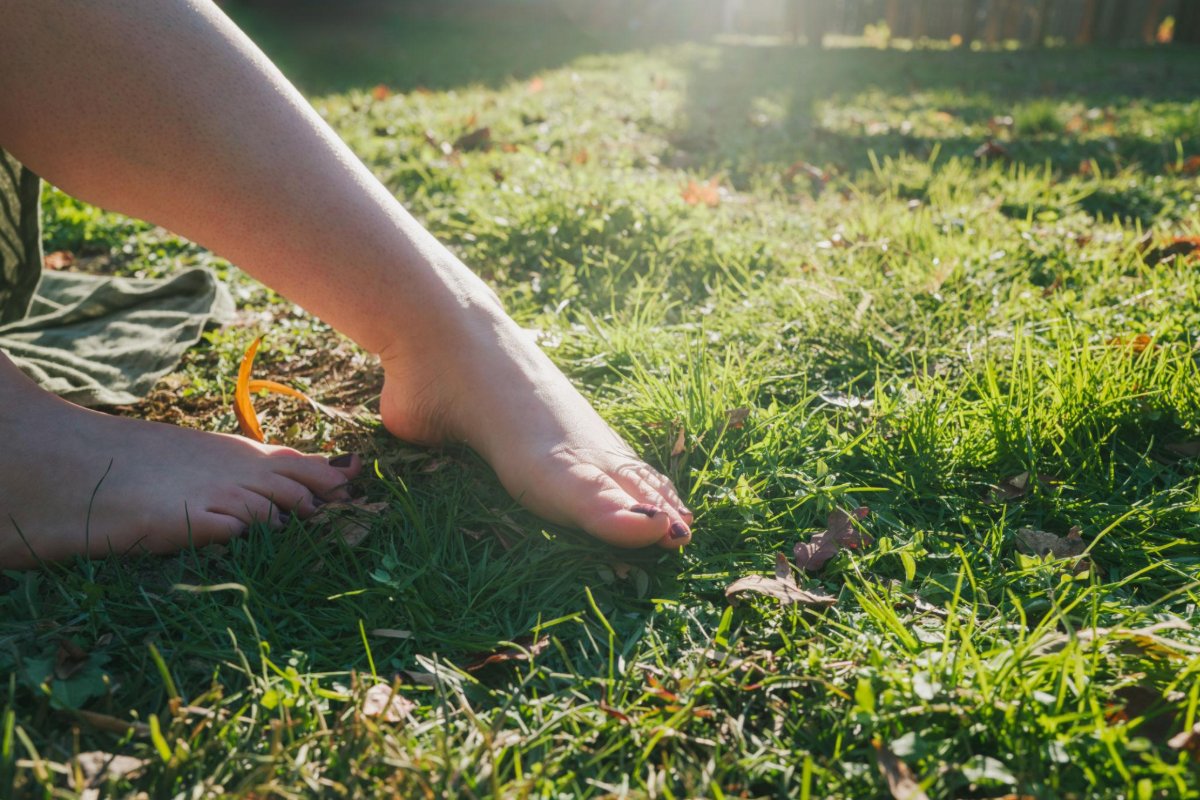
Outdoors, thirty minutes barefoot on grass, soil, sand, or unsealed concrete grounds you completely. If standing that long is tiring, sit in a chair with both feet flat on the ground. Morning is the better slot, because you collect daylight at the same time.
Indoors, the practical question is contact time. Twenty minutes in a chair is useful. Eight hours asleep is the version the research leaned on, and it costs you nothing you were not already doing. A grounding mattress cover turns those hours into continuous contact with the earth, during the window when repair is busiest.
Your home is already connected to the ground through the grounding port on a properly wired outlet. Grounding products connect to that port alone and carry a built-in safety resistor. No electricity flows into you. One caution has nothing to do with electricity, keep the cord away from the side of the bed you get out of at night, because a trip hazard in the dark is a real risk in a way that grounding is not.
The grounding mattress cover delivers the long overnight contact windows the sleep and cortisol research used.
Grounding mats replicate the seated daytime sessions common in the blood and nervous system work.
Grounding accessories such as patches and bands mirror the targeted setups used in the soreness studies.
Test your outlet with a plug-in checker first.
Frequently Asked Questions
Does grounding help with sleep as you get older?
Possibly. A month-long comparison against an identical non-grounding mat found sleep quality, daytime sleepiness, and total sleep time all improving in the grounded group. Those participants were not specifically older adults, so treat it as promising rather than settled.
How long before older adults notice a change?
Individual timelines vary. The sleep and cortisol research ran for weeks rather than nights, and people who notice a change usually describe it as gradual. A month of consistent use is a fair trial before you make up your mind.
Is grounding safe with a pacemaker or medication?
Ask first. If you have a pacemaker or another implanted electrical device, or you take blood-thinning medication, speak with your doctor before starting. Grounding products carry a built-in safety resistor, but that conversation still comes before the purchase.
Do I need to go outside, or is indoor grounding enough?
Both help. Barefoot time outdoors is free and it is the version your body evolved around, and it is also the version most people cannot fit into a February evening. Indoor products exist to cover the hours the weather takes away.
Can grounding slow aging?
No. Nothing in this research addresses lifespan, disease, or memory, and any brand suggesting otherwise has left the evidence behind. What has been measured is sleep quality, recovery after exertion, and markers of nervous system balance.
Give Yourself Four Weeks
The research points somewhere consistent, and the only measurement that will convince you is the one you take yourself. Sleep grounded for a month and pay attention to the ordinary things, how the first hour of the morning feels, how long yesterday's effort stays in your legs, whether three in the morning still wakes you.
Earthing.com is the origin brand, founded on the work of Clint Ober, who funded much of the research described above rather than simply selling around it. Explore the grounding collection and give the years ahead an easier surface to land on.


Leave a comment
This site is protected by hCaptcha and the hCaptcha Privacy Policy and Terms of Service apply.