

It is ten at night and nothing is wrong. The dishes are done, the house is quiet, the day asked nothing difficult of you, and you are still sitting there with your shoulders somewhere up near your ears, running an engine nobody ordered.
You would struggle to describe it to anybody. There is no pain in it and no drama, just the sense of being switched on with nothing left to be switched on for.
Grounding heart health research went looking for that state with instruments, and the thread it followed is the heartbeat. The blood side of the story, what earth contact did to the way blood moves, lives in the blood viscosity research. This piece stays with the gear your nervous system idles in.
Here is what has been measured, what nobody has measured, and what to do with the difference.
The Wobble That Is Supposed To Be There
A healthy heart does not keep time. Put a ruler on the gaps between your beats and no two come out the same length, a few milliseconds longer here, a few shorter there, and you notice none of it.
That wobble is not a fault in the machine.
It has a name, heart rate variability, the small difference in timing between one beat and the next, and it reports flexibility rather than force.
Two systems share the controls and pull against each other all day. One is the accelerator, the system that answers a ringing phone at eleven at night. The other is the brake, which runs the parts of you that only work properly when nothing is being demanded.
Neither one is the villain. What matters is the handover.
Your heart rate should rise a little as you breathe in and fall as you breathe out, and it should climb a flight of stairs and come back down without being told twice. Variation in those gaps means both systems are still in the conversation.
You cannot feel any of it in yourself. A chest strap reads it in minutes.
Nobody Has Followed Grounded People Out Over Years
Take the awkward part now, before it turns into a promise.
The readings in this field were taken across an afternoon, or across a night. Nobody has followed grounded people for a decade, and no study has shown that grounding treats a heart condition, prevents one, or changes anybody's risk of one. It is not a heart treatment and nothing here should be read as one.
What makes that less disappointing than it sounds is what did get measured. Not disease and not outcomes. The state your nervous system settles into while nothing much is being asked of it, read off machines.
That is a wellness question rather than a medical one.
What The Grounding Heart Health Research Picked Up
The steadiest thing grounding appears to do is also the quietest.
When researchers have tracked heart rate variability in grounded people, the readings slide toward the calm end of the scale, the side that runs repair and digestion, and away from the side that handles emergencies. The movement turned up while the connection was live, which is the timing a real effect ought to keep.
None of that is a sensation. It is a number coming off a machine.
A sensation travels alongside it, and people describe it as the difference between a body still braced for something and a body that has let the brace go. Shoulders coming down away from the ears without being told. The particular feeling of having stopped.
Chevalier has published this work. You can tell an interviewer you slept well. You cannot instruct your own heart to space its beats differently while a machine watches, which is the difference between a number and an opinion. Whether expectation explains part of it is a fair question, and it is answered properly elsewhere.
These are small studies, and small studies deserve to be called small.
The Evening That Never Quite Ends
The day finishes, the laptop closes, and something in you does not get the message. You are horizontal, the house is quiet, and your body is still holding a low idle it never agreed to. Then three in the morning arrives with your mind fully staffed and ready to work.
That is a nervous system sitting in one gear. It is not a diagnosis, it is a state, and states move.
Most of what moves them is unglamorous. Daylight in the morning. Movement during the day. A bedtime that does not drift by ninety minutes across a week. Grounding belongs in that same modest category rather than above it.
What it has going for it is position. The hours it uses are hours you were going to spend flat on your back anyway, so it asks for no decision once the bed is made up. A habit that needs a fresh decision every morning is a habit with a leak in it.
What Else The Instruments Read
The other measurements in this field are about delivery. Grounded participants have shown red blood cells less inclined to stack together, and blood that moves more freely as a result. That measurement has an article to itself. The finest vessels in you are narrower than the cells that squeeze through them, so anything making cells cling together costs you most where you can least afford it.
Chevalier also measured blood flow in facial tissue while participants were grounded, using laser equipment on skin thick with small vessels. Flow improved during the sessions.
Then there is inflammation, the deepest part of this literature and not about the heartbeat at all. Oschman, Chevalier and Brown pulled that work together in one review for the Journal of Inflammation Research, and the notion they set out is that free electrons drawn up out of the ground can behave like antioxidants.
Different instruments, aimed at one system, with a mechanism still being worked out.
Fitting It Into An Ordinary Week
Start with the free version, because it is the same connection.
Thirty minutes barefoot on grass, soil, sand or unsealed concrete grounds you completely, and costs nothing but the time. Wet ground conducts better than dry. Gardening counts, and so does standing outside with a coffee.
Then October arrives, and the case for indoors makes itself. It covers the months where standing on a lawn is not on offer, and the two blocks of time you were never going to spend outside anyway, the sleeping hours and the desk hours.
One thing to raise with a person rather than a search engine. If you take a prescribed heart medication or an anticoagulant, or you have a pacemaker or any other implanted device, speak to your doctor before you start. They hold the whole picture and an article does not.
The First Month, Honestly
Nothing announces itself. No warmth at the point of contact, no tingle, no hum, and if you spend the first week waiting to feel it switch on you will be disappointed.
Sleep is what people tend to report first, often inside the first week or two. Anything else moves more slowly, if it moves for you at all. A minority feel something less pleasant at the start, mild aching or a restless few nights, and it usually settles within a week.
If you own a watch that reads heart rate variability, write down a week of numbers before you change anything and compare your own trend with your own baseline. If you do not, how you feel at eleven the next morning is a perfectly good measure.
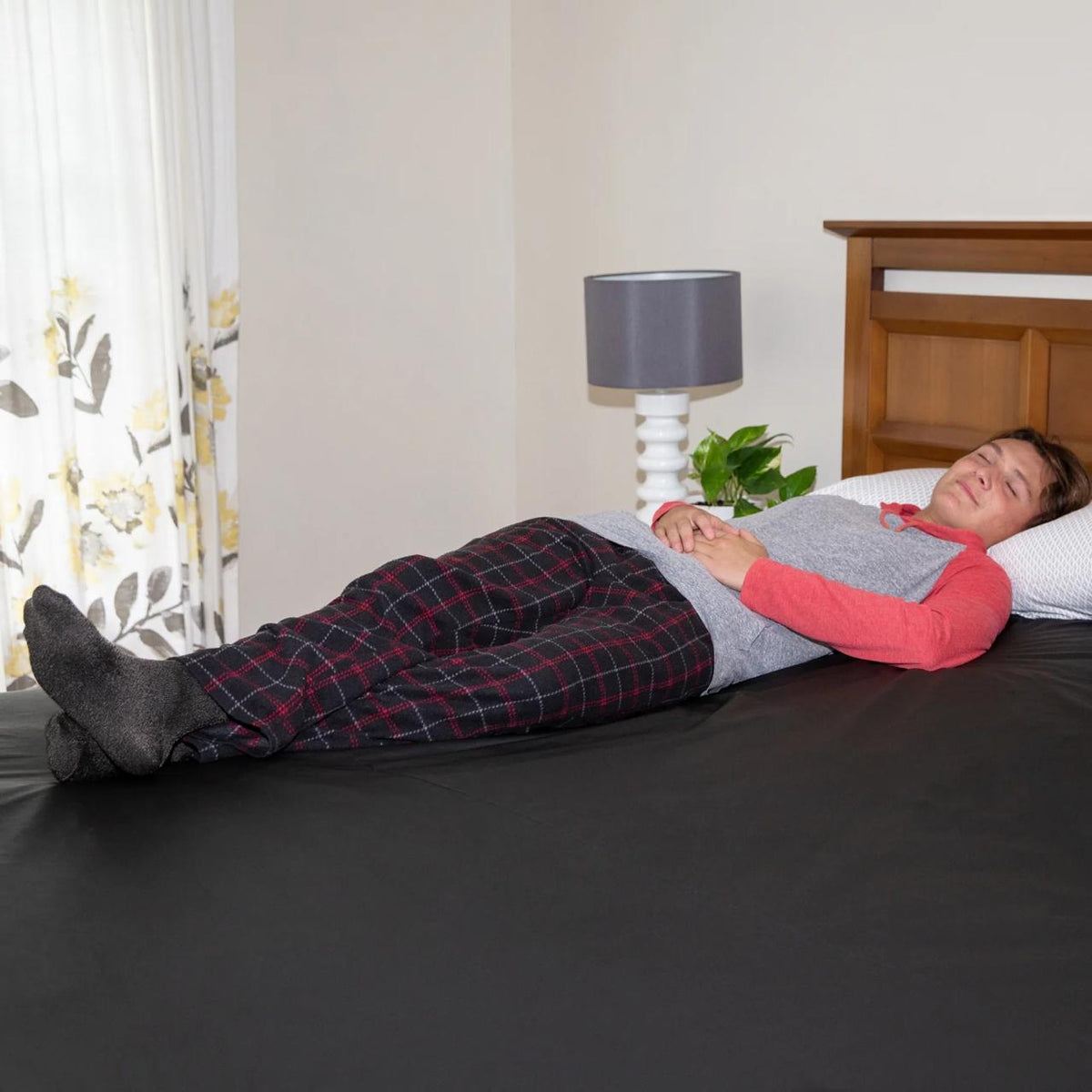
The grounding mattress cover runs through the night, the longest unbroken stretch of contact anybody gets.
Grounding mats match the seated sessions those readings were taken during.
Grounding accessories such as patches and bands are the targeted version, for a single site.
Test your outlet with a plug in checker first, since older houses and rewired rooms are not always wired the way the paperwork claims. Earthing products connect to the ground port alone and carry a built in safety resistor, so no electricity flows into you.
Grounding is a complementary wellness practice that supports the body's natural balance. It is not a treatment for any medical condition, and it belongs alongside your existing care.
Frequently Asked Questions
What does the grounding heart health research measure?
Instrument readings, mostly. Heart rate variability, how easily blood moves, the charge on red blood cells, and flow through the smallest vessels. These are physiological measures taken during and after grounding, not long term outcomes, and they say nothing about disease.
What is heart rate variability in plain terms?
The small difference in timing between one heartbeat and the next. More variation generally reflects a nervous system that can shift between states as the day changes. Less variation suggests a system that has settled into one setting and stayed there.
Is more heart rate variability always better?
Not as a scoreboard. The number varies enormously between people with age, fitness and genetics, so comparing yours with somebody else's tells you little. Your own trend across weeks is the comparison worth making.
Should I speak to my doctor before grounding if I take heart medication or have a pacemaker?
Yes, and it is a short conversation. Your doctor is managing a dose or a device and should know everything that sits alongside it. Nothing here supports stopping, reducing or delaying anything you have been prescribed.
Is there a free way to try this?
Yes, and it is the sensible place to start. Grass, damp earth, sand and unsealed concrete all conduct, and half an hour on any of them costs nothing. Bedding and mats exist for the hours you could never have spent outdoors anyway.
Start With The Quiet Hours
None of these instruments read your character or your willpower. They read which gear a nervous system idles in when nothing is being asked of it. That is a state, not a verdict. Four weeks of ordinary nights in your own bed will tell you more than any argument on a page.
Earthing.com is the origin brand, founded on the work of Clint Ober, who funded much of the research described above rather than simply selling around it. Explore the grounding collection and let your own four weeks answer it.


Leave a comment
This site is protected by hCaptcha and the hCaptcha Privacy Policy and Terms of Service apply.