
The lawn that grounded you so easily in September is a very different surface in January.
Same grass. Same soil. Same yard. But once the water held inside that ground begins to freeze, the electrical properties of the ground change right along with it.
This is where a lovely summer habit can turn into an unnecessary struggle. If you spent months stepping outside barefoot every morning, it's tempting to hit the first hard frost and assume the answer is simply to keep doing the same thing, just for shorter stretches.
It isn't.
Winter changes both sides of the equation. Frozen soil is less conductive than moist, unfrozen soil, and putting bare feet on freezing ground introduces a much more important problem: cold injury.
So the sensible winter approach isn't to prove your commitment by standing barefoot in the snow. It's to understand what the weather actually changes, take outdoor grounding when conditions truly make sense, and move the rest of the practice indoors until the ground warms up again. Your habit stays intact. Only the method shifts.
Why Moist Ground Works Better
Soil isn't conductive simply because it's "earth." Its electrical behavior depends heavily on the water and dissolved ions inside it.
Moist soil holds liquid water carrying minerals and salts, and those dissolved ions can move through the water, creating pathways for electrical current. That's one reason damp grass or moist soil tends to make a better grounding surface than bone-dry ground.
When the temperature drops below freezing, much of that liquid water changes state. The water molecules lock into ice, and the mobility of the ions that helped carry charge drops dramatically. Research into frozen soils consistently finds that electrical resistivity rises as temperature falls and unfrozen water content shrinks. ScienceDirect
Frozen ground isn't necessarily a perfect insulator. Some unfrozen water can linger around soil particles even below 0°C, especially where salts and minerals lower the local freezing point. But that doesn't make a frozen lawn anything like the moist soil you stood on in August. The connection becomes far more variable and substantially less conductive.
In practical terms, once the ground is hard-frozen, clinging to your usual barefoot routine stops making much sense.
Snow Does Not Solve the Problem
Snow looks like the obvious workaround. It's water, it's touching the ground, and it's often wet enough to cling to your boots. Surely standing barefoot in snow connects you just as well?
That reasoning misses what snow actually is.
Fresh snow is mostly ice crystals separated by pockets of air. Both the frozen state of the water and all that trapped air change how the material behaves compared with liquid water or moist soil.
Wet, melting snow is different, because liquid water starts moving through the snowpack. But by the time the snow is wet enough for that distinction to matter, you've created a new problem: you're standing with bare feet in near-freezing water.
There's no good reason to chase that trade-off. Grounding is supposed to be a low-effort wellness practice. Standing barefoot in slush while your toes rapidly lose heat turns it into something else entirely.
Cold Safety Comes Before Grounding
If you remember one thing from this article, make it this: there is no grounding benefit worth risking frostbite for.
Frostbite happens when tissue freezes, and fingers and toes are especially vulnerable because the body pulls circulation away from the extremities to protect its core. One of the sneakiest things about frostbite is that numbness can take away the very sensation you'd normally rely on to tell you something is wrong.
The CDC lists early redness or pain as warning signs, and identifies white or grayish-yellow skin, unusually firm or waxy skin, and numbness as signs that frostbite may already be developing. Anyone showing those signs should get out of the cold and seek appropriate medical care. CDC
Cold and moisture together deserve even more respect. The CDC notes that hypothermia can occur even at temperatures above 40°F (about 4.4°C) when someone becomes wet and chilled. CDC
So there's no place for a challenge mentality here. If your feet are getting painfully cold, numb, pale, waxy, or hard to control, the grounding session ended before you started wondering whether you could tough out another five minutes.
Go inside. Put the kettle on.
Winter Does Not Mean You Can Never Ground Outdoors
There's a real difference between "winter" and "permanently frozen ground."
A mild afternoon after a few warmer days can leave the soil soft and wet even though there was frost earlier in the week. Rain can thaw the upper layer. A stretch of above-freezing weather can return a lawn to almost the same conditions you'd have in autumn.
If the ground is soft, moist, and unfrozen, and the air is comfortable enough that bare feet aren't becoming painfully cold, outdoor grounding is still very much on the table.
So don't use the calendar as your test. Use the actual conditions. A wet lawn at 50°F is not the same environment as a frozen lawn at 26.6°F, even if both days happen to fall in January.
This is also why warmer winter climates have far less of a seasonal problem. If the soil never freezes where you live, there may be no meaningful interruption at all. The issue is frozen surfaces and cold exposure, not the word "winter."
Winter Is When Indoor Grounding Becomes Most Useful
For most people living somewhere with a real cold season, the simplest answer is to stop depending on outdoor grounding for a few months.
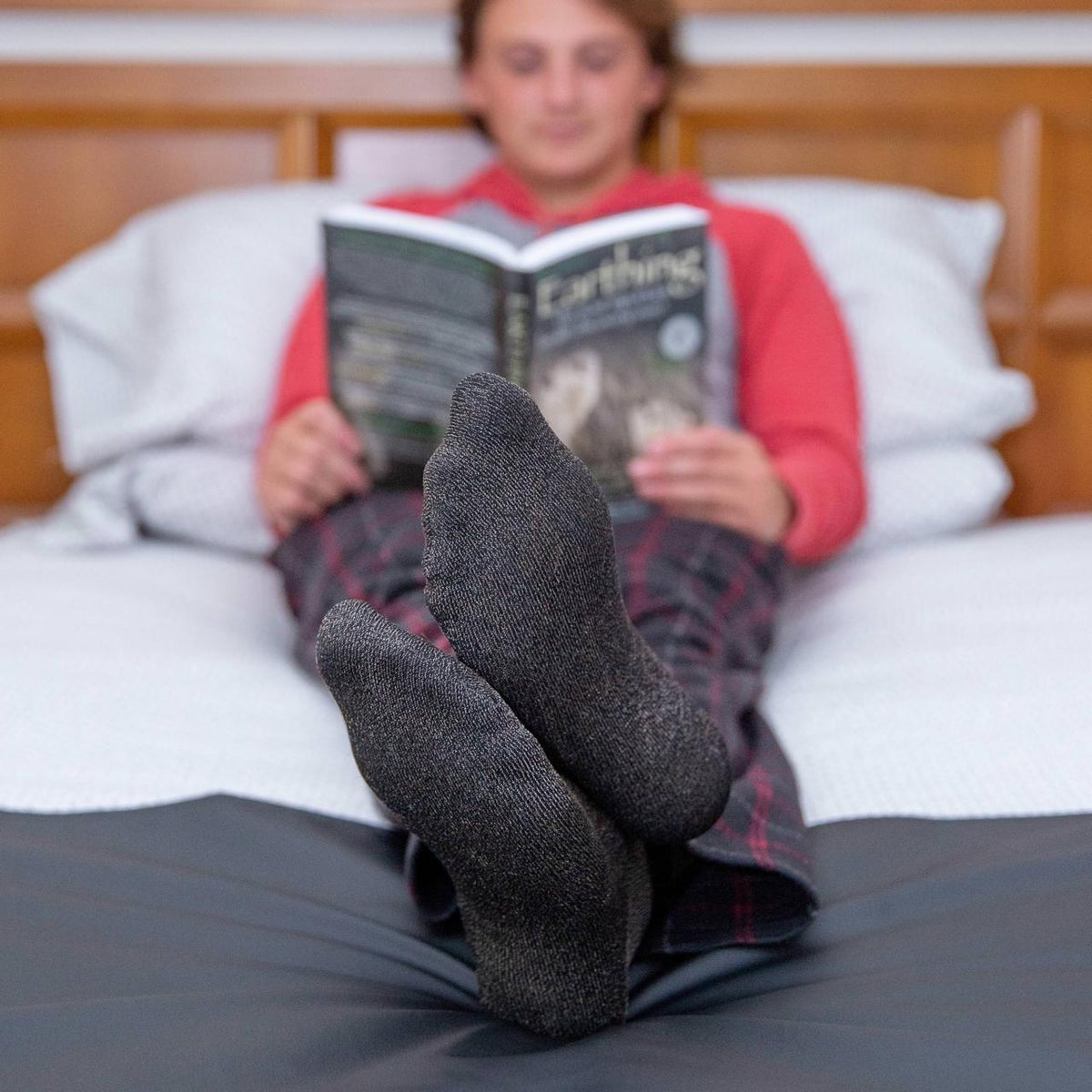
This is exactly where indoor Earthing products earn their keep. Instead of trying to make contact through frozen soil, you create the grounding pathway indoors through a properly connected conductive product.
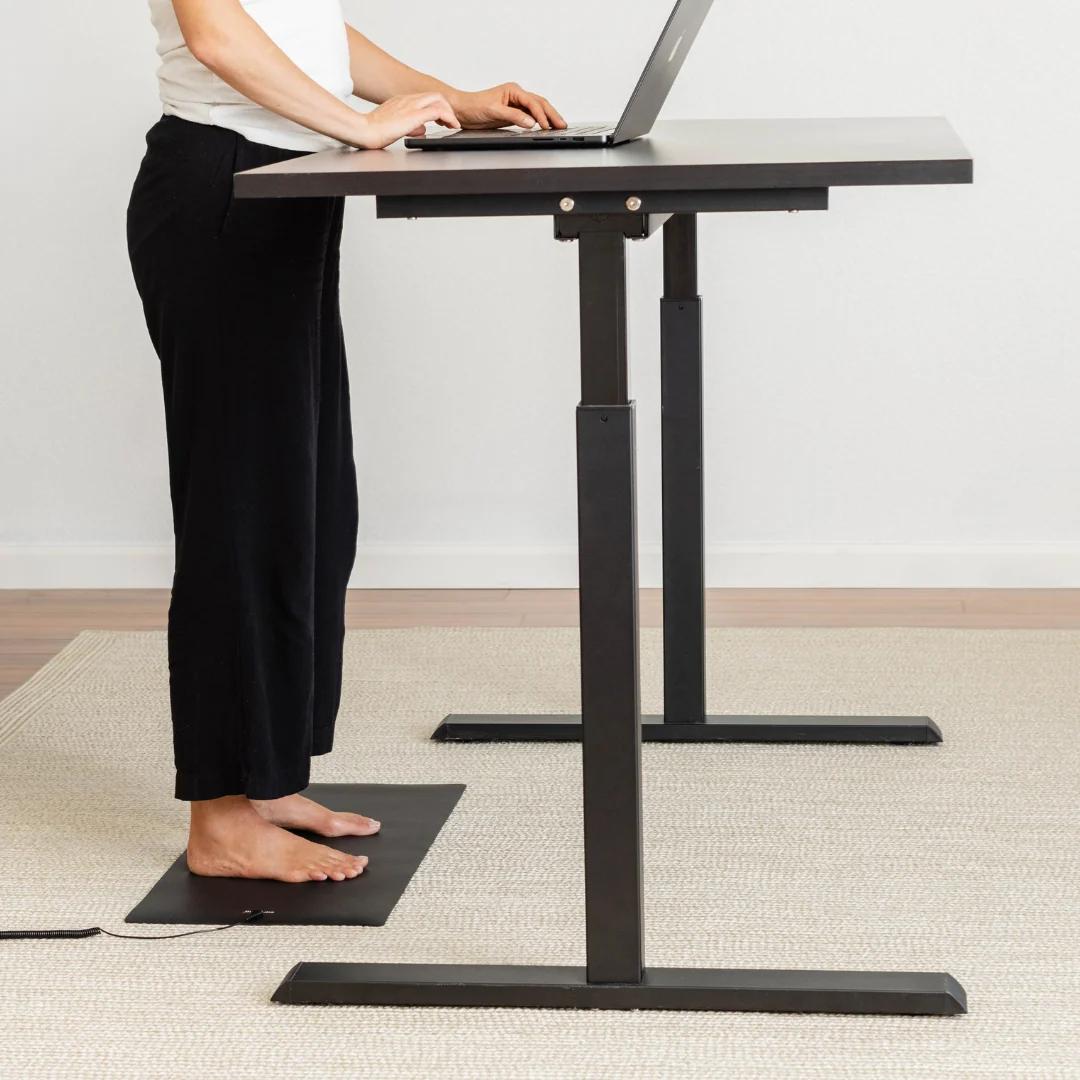
A Universal Mat can sit under your feet while you work or curl up on the couch. A Sleep Mat or Mattress Cover can provide contact during the longest uninterrupted block of your day: sleep.
Suddenly the weather outside no longer decides whether the practice happens. You're not waiting for rain, checking whether the soil has thawed, or negotiating with your toes about how much cold they can handle. You connect the product to a verified grounding source and use it as part of something you were already doing.
That's a far more sustainable winter strategy than forcing the outdoor version into conditions it was never suited to.
Your Bedroom Is Probably the Easiest Winter Setup
Winter usually means more time indoors and more time in bed, which makes sleep the obvious place to keep your consistency.
Once an Earthing Sleep Mat or Mattress Cover is installed and the connection is verified, the routine doesn't change because the temperature outside drops. You get into bed the way you always do.
As we covered in Article 111, bare skin gives you the simplest and most reliable connection, while thin, breathable natural fabrics can still allow conductivity as moisture builds. So a thin cotton sheet or light pajamas don't have to get in the way.
The real beauty is that you no longer need to manufacture a separate "grounding session." Seven or eight hours were already reserved for sleep. The grounding setup simply moves into that window.
If your outdoor grounding tends to vanish every winter because it becomes inconvenient, that difference matters far more than trying to optimize a ten-minute cold-weather session.
The Workday Is the Other Easy Window
The same logic applies to your desk.
Winter tends to pile up indoor hours. You may spend most of the day with insulated flooring underneath you, socks on your feet, and very little contact with anything outdoors. A mat under the desk turns those hours into usable contact time without changing your schedule at all.
And carpet doesn't matter, as we covered in Article 112. The grounding connection doesn't travel down through your carpet and flooring. It comes through the cord.
If you work from home, this can be one of the easiest seasonal switches to make. Warm months might mean more barefoot time outside. Cold months shift more of that contact to the desk and the bed. The habit continues while the method changes.
Winter Air Also Makes Electrical Isolation More Noticeable
There's another reason winter makes this whole subject feel more obvious: indoor heating dries the air.
Lower humidity lets static charge build up more easily, which is why winter is the season of shocks from doorknobs, blankets, sweaters, and carpet. You might walk across the exact same rug in July and notice nothing, then cross it in January and get a spark from the first piece of metal you touch.
That static shock isn't proof of any health effect on its own. But it's a useful demonstration of how electrically isolated modern indoor life can become. Rubber footwear, synthetic flooring, dry air, carpet, raised buildings, and long stretches indoors all move daily life further from the direct earth contact that happens naturally when bare skin touches conductive ground.
Winter simply makes some of those conditions more pronounced.
What About an Outdoor Ground Rod in Winter?
A ground rod gets more complicated in a climate where the soil freezes deeply. Its performance depends on the conditions around the rod and how much unfrozen, moisture-containing soil stays in contact with it.
A rod driven into moist soil before winter doesn't automatically stop making contact the moment the grass frosts, because soil temperatures vary with depth and the ground doesn't freeze uniformly from the surface down.
That said, this isn't the season to improvise. Please don't start hammering rods into hard ground midwinter. If you already use an outdoor ground-rod setup, follow the product manufacturer's installation and safety instructions and make sure the connection remains appropriate for your environment.
If you use outlet grounding indoors, winter generally changes nothing about the connection itself. The important thing is what it was in summer: verify the outlet instead of assuming it's correctly grounded.
Do Not Turn Winter Into a Test of Willpower
A practice tends to survive when it bends around normal life. It tends to disappear when every seasonal change becomes a new challenge.
Standing barefoot outside when the grass is soft, damp, and comfortable is effortless. Standing barefoot outside when the ground is frozen and the air hurts your feet requires deliberate suffering. Those aren't the same habit, and there's no prize for choosing the harder one.
If conditions are comfortable and the soil is unfrozen, go outside. If the ground is frozen, use the indoor setup. When spring returns, take your shoes off again.
Continuity matters far more than keeping exactly the same method twelve months a year.
Frequently Asked Questions
Can You Ground on Frozen Ground?
Frozen soil can retain some electrical conductivity because not every trace of water necessarily freezes, but its resistivity rises significantly as the temperature drops and unfrozen water content decreases. It's much less reliable than moist, unfrozen soil and not a surface worth planning a grounding routine around. ScienceDirect
Can You Ground Barefoot in Snow?
Snow shouldn't be treated as the winter equivalent of damp grass. Dry snow is ice plus a great deal of trapped air, while wetter snow brings an obvious cold-exposure problem. There's no need to stand barefoot in snow to keep a grounding routine going.
What If the Snow Is Melting?
Melting conditions mean more liquid water is present, but that doesn't make bare feet on near-freezing wet surfaces a good idea. Protecting your feet from cold injury comes first.
Is It Safe to Walk Barefoot Outside in Winter?
It depends on the actual temperature and conditions, but bare feet shouldn't be exposed long enough to become painfully cold or numb. Redness or pain can be early warning signs of frostbite, while pale or grayish skin, waxiness, firmness, or numbness need immediate attention. CDC
Is Indoor Grounding Different in Winter?
The basic setup doesn't change. A conductive Earthing product still connects through its grounding cord to a verified ground. The temperature outside doesn't alter the principle of the indoor connection.
Should I Stop Outdoor Grounding for the Entire Winter?
Not necessarily. If you get a mild spell and the ground is truly thawed, moist, and comfortable enough for bare feet, outdoor grounding can still be practical. What matters is the condition of the surface and the cold exposure, not the month on the calendar.
What Is the Easiest Way to Stay Grounded Through Winter?
For most people, the easiest approach is to move the majority of grounding indoors. A mat during work or downtime plus an overnight sleep setup takes the weather out of the equation entirely.
Let Winter Change the Method, Not the Habit
The mistake is thinking grounding has to look identical in July and January. It doesn't.
Warm weather gives you grass, soil, sand, and long, easy stretches outdoors. Winter gives you frozen ground, dry indoor air, insulating footwear, and more time inside. So adapt.
Take outdoor grounding when the ground is soft and moist and the temperature makes bare skin sensible. When frost and snow take over, stop trying to out-stubborn the weather and let an indoor setup carry the habit instead. Then, when the first truly warm, damp morning comes back around, step outside again.
The earth didn't go anywhere for winter. You just need a cozier way of reaching it.
For the sleep window, that's the Earthing Sleep Mat and Mattress Cover. For the workday, it's the Universal Mat under your desk. And before you rely on either, the Outlet Checker confirms your outlet is ready, whatever the weather is doing outside.


Leave a comment
This site is protected by hCaptcha and the hCaptcha Privacy Policy and Terms of Service apply.