
Picture a dry winter afternoon. You pad across the living room carpet in your socks, reach for the metal doorknob, and get that sharp little snap on your fingertip.
Annoying, yes. But that tiny shock is also telling you something useful about the floor under your feet.
As you moved across the carpet, a charge built up on your body with nowhere easy to go. Instead of connecting you to the earth, the carpet quietly insulated you from it, right up until all that stored-up charge found another way out (hello, doorknob).
So if you've been wondering whether standing barefoot on carpet counts as grounding, the honest answer is no.
Here's the good news, though, and it's the part that matters: carpet doesn't stop you from using an Earthing product indoors. Once you see how an indoor grounding product actually reaches the earth, the flooring underneath it becomes almost beside the point.
Carpet Is an Insulator
Grounding needs a conductive pathway between your body and the earth. Outdoors, that pathway is about as simple as it gets: bare skin meets grass, soil, sand, or another suitable surface, and the connection happens directly through the ground beneath you.
Carpets don't offer that.
Residential carpet is usually nylon, polyester, polypropylene, triexta, wool, or some blend of those. Under it sits a layer of foam, rubber, or synthetic padding. Under that, there may be plywood, oriented strand board, joists, insulation, concrete, or an entire floor of the building. So even with your shoes off, you can still be separated from the earth by several layers of insulating material.
That's why kicking off your shoes indoors doesn't automatically mean you're grounded. Bare feet on grass and bare feet on carpet may feel similar to you, but electrically they're two very different situations.
Carpet Can Also Build Static Charge
The carpet doesn't just fail to ground you. Under the right conditions, it can help static charge build up.
When two different materials rub together and pull apart, electrons can hop from one to the other. That's the triboelectric effect, and it's why shuffling across a rug can leave you carrying enough charge to feel a spark when you touch metal.
The effect is far more noticeable when the air is dry. Humid air lets electrical charge drift away easily. Dry winter air doesn't, especially once the heat comes on and pulls even more moisture out of the room. That's why static seems to be everywhere in colder months: carpets, blankets, the sweater you just pulled over your head.
None of this means static electricity explains every proposed effect of grounding. It just illustrates the point clearly: carpet is good at isolating you electrically rather than connecting you to the earth.
What About Carpet Over Concrete?
A question we hear a lot: if there's concrete under the carpet, does the carpet somehow become conductive?
It doesn't.
Even if the slab itself could conduct electricity, the carpet and underlay are still sitting between your body and the concrete. Think of a copper wire wrapped in rubber. The copper inside conducts beautifully, but touching the rubber jacket doesn't connect you to it.
Same principle here. Conductive concrete buried under insulating carpet isn't something you're in electrical contact with.
Can Concrete Ground You?
Bare, unsealed concrete that sits directly on the earth can sometimes provide a conductive pathway, because concrete is porous and holds moisture and dissolved minerals. That's why an unfinished basement or garage slab can behave very differently from carpet, laminate, or finished wood.
The details matter, though.
Once concrete is painted, sealed, epoxied, tiled, covered with vinyl, or buried under another flooring material, that direct pathway can shrink or disappear entirely. And an elevated concrete floor isn't the same as a slab poured onto the ground. A concrete balcony or an upper-story floor may be made of concrete without offering the kind of direct earth contact people picture.
So concrete is one of the few indoor surfaces that can sometimes conduct, but "looks bare" isn't the same as "grounds you."
Hardwood, Laminate, Vinyl, and Tile Are Not Reliable Grounding Surfaces
For grounding purposes, treat most finished flooring in your home the same way you'd treat carpet.
Finished hardwood is typically sealed and sits on a subfloor or structural system that separates it from the earth. Engineered wood and laminate add even more manufactured layers. Vinyl and luxury vinyl planks are made from materials that insulate very effectively.
Tile is the one that fools people, because it feels cool and solid under bare feet. But ceramic and porcelain aren't reliable grounding surfaces, especially when glazed, and underneath the tile there may be adhesive, membranes, cement board, plywood, or other layers interrupting any possible path.
Rather than memorizing which floor conducts slightly better than which, keep the simpler takeaway: most indoor floors were never designed to connect your body to the earth.
And happily, an Earthing product doesn't need them to.
A Grounding Mat Does Not Ground Through the Floor
This is the distinction that settles almost the entire question.
An Earthing mat placed on carpet isn't trying to reach the earth through the carpet. The mat has its own electrical pathway. Its conductive surface connects through the grounding cord to a verified ground, usually the ground port of a correctly wired outlet or an appropriate ground rod setup.
Your body touches the mat. The mat connects through the cord. The cord completes the pathway to the earth. The carpet underneath never enters the circuit.
That means a grounding mat can sit on carpet, hardwood, laminate, tile, vinyl, or a rug without the flooring changing how the connection works. Outdoor grounding and indoor grounding simply reach the same destination by different routes: outdoors, the surface beneath you is the pathway; indoors, the product and cord are.
Putting a Grounding Mat on Carpet
So a carpeted room is a perfectly good home for an Earthing mat.
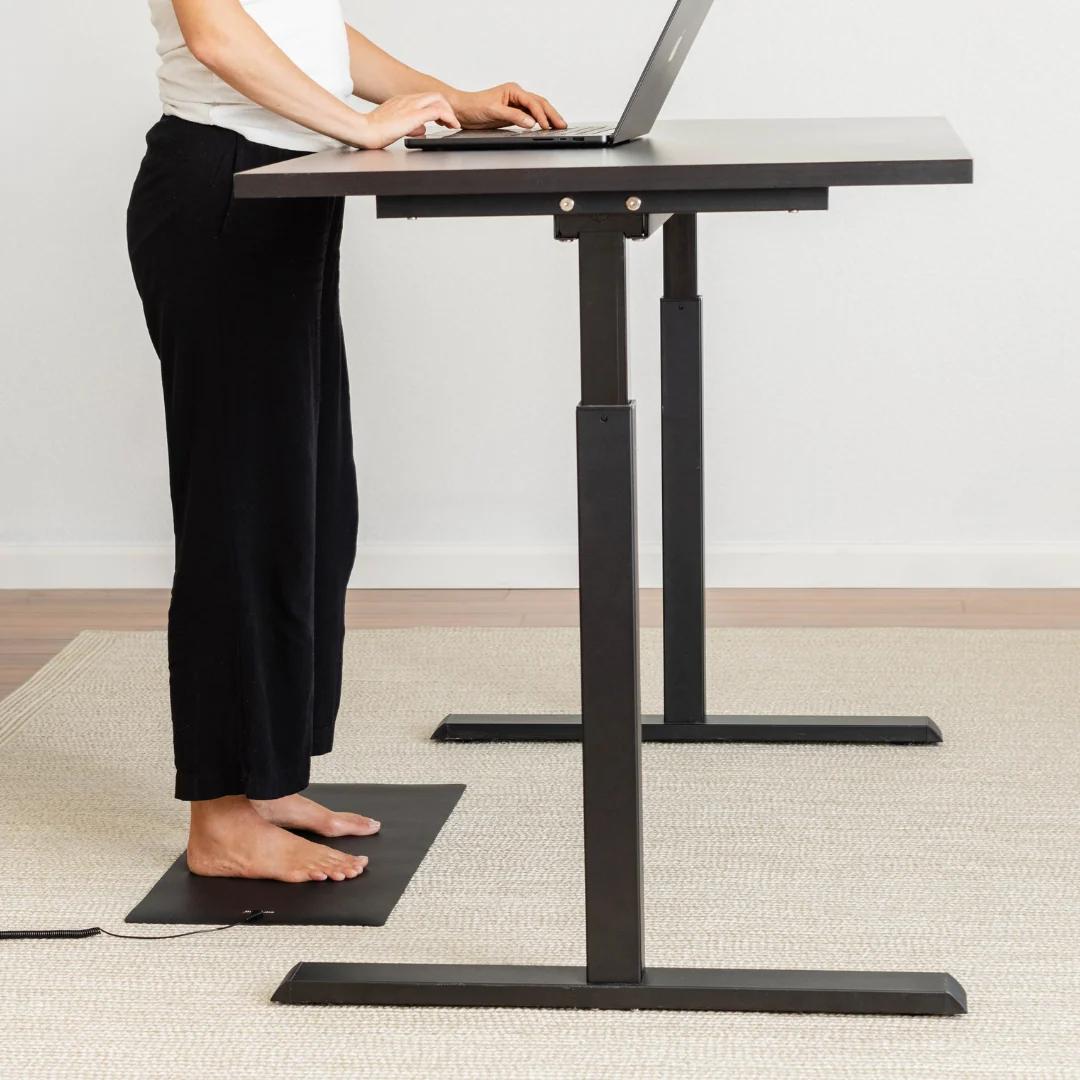
Put one under your desk, beside your reading chair, in front of the couch, or anywhere else you naturally spend long stretches of time. There's no need to pull up the carpet or slide a conductive layer underneath. What matters is the connection above the mat, not below it.
Direct skin contact is still the simplest and most reliable arrangement: bare feet on the mat take the guesswork out and make the setup easy to verify. As we covered in the previous article, thin natural fabrics can sometimes allow conductivity as moisture builds, but if you want the most straightforward version, skin on the surface is the cleanest.
The floor underneath can stay exactly as it is.
The Outlet Matters More Than the Flooring
While the carpet under your mat is largely irrelevant, the electrical ground you connect the mat to is not.
A three-prong outlet can look perfectly normal and still have no working ground behind it, especially in older homes where outlets have been swapped out over the years. That's why the outlet gets checked before you rely on it.
A plug-in Outlet Checker confirms whether the ground is present and whether the receptacle is wired correctly. If the outlet doesn't have a working ground, connecting an Earthing product to it won't create one. In that case, another correctly grounded outlet may do the job, a qualified electrician may need to look at the wiring, or an outdoor ground-rod setup may be an option.
The important part is that the connection is verified, not assumed.
What If the Mat Is on an Area Rug?
Same answer, same reason.
An Earthing mat can sit on top of an area rug because the rug is underneath the conductive surface and isn't part of the grounding pathway. Your body connects to the mat, and the mat connects to the earth through the cord.
What would change things is an insulating layer between your body and the mat. A thick blanket, a cushion, a rug, or any other substantial material laid over the conductive surface could interfere with your connection, because now the barrier is sitting exactly where contact needs to happen.
So the practical setup stays uncomplicated: put the mat where you want it, connect it properly, and keep suitable contact with the conductive surface.
The Same Principle Applies on a Desk
A grounding mat doesn't have to live on the floor at all.
Set one on a wooden, laminate, glass, or composite desk and use your hands or forearms as the contact point. The desk material doesn't matter, because the mat isn't trying to conduct through the desk. The cord provides the earth connection.
If you spend most of your day at a computer, this is a lovely way to fold grounding into a routine you already have, rather than carving out a separate session. The same logic applies to a mat beside the couch or your favorite reading chair. You're not rebuilding the room around the product. You're just adding a conductive surface where your body already spends time.
The Same Is True in Bed
Your mattress doesn't need to conduct, either.
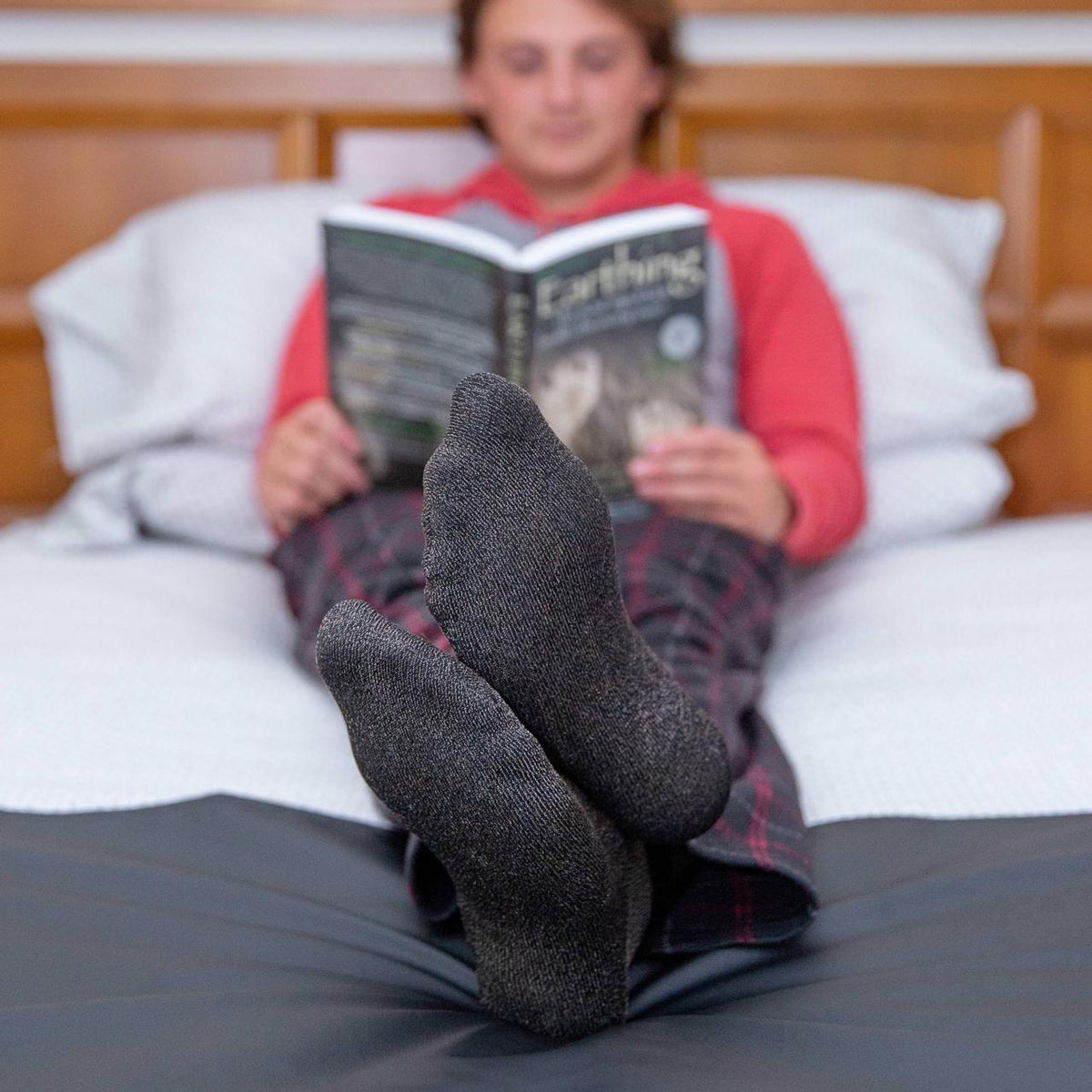
An Earthing Sleep Mat or Mattress Cover creates its own grounding pathway through the cord, which means the mattress, bed frame, carpet, and subfloor underneath it aren't responsible for grounding you. Someone in a carpeted bedroom can sleep grounded just as easily as someone with hardwood or tile.
The essentials are the same in every bedroom: the product needs to be connected properly, the grounding source needs to be verified, the conductive surface needs to be working, and your body needs suitable contact with it. The floor under the bed doesn't participate at all.
Do Not Try to Make Carpet Conductive
One thing not to bother with: spraying water on your carpet to make it conductive.
A damp carpet may behave a little differently electrically than a bone-dry one, but that still doesn't create a reliable, intentional pathway through the underlay, subfloor, and structure beneath it. All you'd really be doing is introducing moisture into materials that were never meant to stay wet, which invites staining, odor, mildew, mold, and damage while solving none of the actual problem.
If you want an indoor grounding pathway, use one that was designed for the job.
How to Know the Connection Is Actually Working
Don't rely on whether you feel something.
A working grounding connection doesn't need to produce tingling, warmth, heaviness, relaxation, or any other obvious sensation. Some people report sensations. Others feel nothing at all. Neither proves whether the electrical pathway is functioning.
The better approach is to verify the setup. The Outlet Checker confirms the wall ground, and the appropriate product-testing equipment confirms that the conductive surface and connection are doing what they should.
If something fails, work through the pathway logically instead of guessing: the outlet, the grounding cord, the connection point, the conductive surface, and the way your body is contacting it. That's far more useful than deciding whether the mat "feels" grounded.
Frequently Asked Questions
Can I Ground Myself by Standing Barefoot on Carpet?
No. Carpet is an insulating surface and doesn't provide a reliable conductive pathway between your body and the earth.
Will an Earthing Mat Work on a Carpet?
Yes. The mat doesn't connect to the earth through the carpet. It connects through its grounding cord to a verified ground.
Do I Need to Remove the Carpet Under My Grounding Mat?
No. The mat can sit right on the carpet.
Can an Earthing Mat Sit on an Area Rug?
Yes. Whatever is underneath the mat isn't part of the grounding pathway.
Can I Put a Rug or Blanket Over the Mat?
That's a different situation, because now the material sits between your body and the conductive surface. The simplest, most reliable arrangement is direct contact with the mat.
Does Hardwood Ground You?
Normal finished hardwood shouldn't be relied on as a grounding surface. The finish, subfloor, structural materials, and distance from the earth interrupt the direct pathway.
Does Tile Ground You?
Most household tile shouldn't be treated as a reliable grounding surface. Ceramic and porcelain are poor conductors, and the construction underneath can isolate the tile from the earth even further.
Can Bare Concrete Ground You?
Bare, unsealed concrete sitting directly on the earth can sometimes conduct because of its moisture and mineral content. Painted, sealed, coated, elevated, or covered concrete shouldn't be assumed to offer the same connection.
Can I Use a Grounding Mat Upstairs?
Yes. The mat uses the grounding pathway its cord provides, so it doesn't need to be anywhere near the soil under the building.
Do I Need to Feel Something for the Mat to Be Working?
No. Verify the electrical connection with the appropriate testing equipment rather than using sensation as the test.
The Floor Underneath You Is Not the Important Part
Carpet doesn't ground you. Neither do most of the surfaces inside a modern home. But an indoor grounding product doesn't need them to.
Instead of trying to force an electrical pathway through carpet, padding, plywood, joists, and everything else between you and the earth, an Earthing product builds a different pathway entirely. Your body contacts the conductive surface. The surface connects through the grounding cord. The cord connects back to the earth through a verified ground.
Once that clicks, flooring stops being much of a question. Put the mat where you actually spend time, verify the connection, and keep good contact with the surface.
The carpet underneath can simply stay carpet.
Ready to set up a grounded corner in a carpeted room? The Universal Mat works under bare feet at your desk or under your hands on top of it, the Earthing Sleep Mat and Mattress Cover bring grounding to any bedroom no matter the flooring, and the Outlet Checker tells you the wall is ready before you plug anything in.


Leave a comment
This site is protected by hCaptcha and the hCaptcha Privacy Policy and Terms of Service apply.