

For many people, the journey into grounding begins with a simple goal: getting a better night’s sleep. A friend mentions they started sleeping grounded and finally stopped waking at three in the morning, and that is the door everyone walks through first. Better sleep is the headline, and it deserves to be.
But sleep is one thread in a much larger picture. When researchers started measuring what happens inside the body during grounding, they found far-reaching effects across circulation, stress hormones, immune activity, mood, and physical recovery. These are the quieter benefits, the ones people notice weeks later when they realize their hands feel warmer, their afternoon slump has softened, and the stiffness they had accepted as normal is simply gone.
This is what the earth's energy does when you let it back in. Here are the benefits that live beneath the headline.
Your Blood Flows More Freely
One of the most striking findings in earthing research has nothing to do with sleep at all. It has to do with your blood.
Red blood cells carry a negative charge on their surface, and that charge is what keeps them apart from one another. The stronger the charge, the more they repel each other, and the more freely they move through your smallest vessels. When that charge weakens, cells drift together and clump, and thick, sluggish blood struggles to deliver oxygen where it is needed.
Researchers studied this directly. They took blood samples before and after participants spent two hours grounded, then measured how strongly the red blood cells repelled one another. The grounded samples showed a substantial increase in surface charge, and the clumping dropped sharply. Blood that had been thick and clustered was moving like blood is supposed to move.
Think about what better circulation does for your body. It carries oxygen to your muscles and nutrients to healing tissue. It creates warmth in your hands and feet. Waste is carried out instead of lingering. And a single connection to the ground improves the medium that reaches every cell in your body.
Your Stress Hormones Find Their Rhythm
Cortisol is supposed to follow a curve. It rises in the early morning to wake you, peaks shortly after you get up, then falls through the day until it bottoms out at night so you can rest. Modern life flattens that curve. Screens, deadlines, artificial light, and constant stimulation leave many people with cortisol that stays elevated at bedtime and sags at dawn, the exact opposite of what the body wants.
In one of the earliest earthing studies, researchers tracked cortisol in participants who slept grounded for eight weeks. The pattern shifted back toward its natural shape. Cortisol fell at night the way it should, and the participants reported falling asleep faster, waking less, and feeling more rested. Pain and stress scores improved alongside the hormone data.
Restoring a cortisol rhythm is not a small thing. That hormone influences your immune system, your blood sugar, your appetite, your mood, and your ability to recover from anything. When it settles back into its natural pattern, everything downstream of it gets easier.
Your Nervous System Steps Down From Alert
Your autonomic nervous system runs two modes. Sympathetic is the accelerator, built for action and threat. Parasympathetic is the brake, the state where you digest, repair, and rest. Health depends on moving fluidly between them, and modern stress keeps far too many people idling in the accelerator.
Researchers measured this balance using heart rate variability, the tiny beat-to-beat differences in your heart rhythm that reveal how adaptable your nervous system is. Higher variability signals a body that can shift gears. Grounded participants showed improved heart rate variability, evidence of a real move toward the calm, restorative side.
The effect appears fast. Studies measuring skin conductance, muscle tension, and breathing rate recorded changes within seconds of the ground connection being made. Your body recognizes the earth immediately. It does not need convincing.
People describe this in ordinary terms. The low hum of tension eases. Their shoulders drop. Research into mood has found the same thing, with grounded participants reporting less tension and a better overall state after just an hour of contact.
Inflammation Quiets Down
Inflammation is the body's repair crew, and it is supposed to arrive, do its work, and leave. When it lingers, it turns from repair into damage. Chronic low-grade inflammation now sits underneath most of the conditions that shorten and complicate modern lives.
Grounding works on inflammation at the source. Free radicals, the reactive molecules that drive the inflammatory cascade, are missing electrons and hunt for replacements wherever they can find them, including in your healthy tissue. The earth supplies free electrons without limit. When they enter your body, they neutralize those radicals before the damage spreads.
Researchers reviewing the earthing literature in the Journal of Inflammation Research described this electron transfer as a plausible mechanism behind the reduced inflammation, faster wound healing, and lower pain scores that keep appearing across studies. Thermal imaging of grounded participants has shown inflammatory hot spots cooling and resolving over time.
Grounding is a complementary wellness practice that supports the body's natural balance. It works alongside good medical care rather than replacing it.
You Recover Faster From Everything
Athletes were among the first to discover grounding's powerful role in recovery. Researchers put participants through hardcore exercise, the kind that leaves you sore for days, then had half of them recover grounded. The grounded group showed different patterns in the blood markers tied to muscle damage and inflammation, and they reported less soreness.
You don't have to be an athlete to benefit from better recovery. Recovery is what your body does after a long day on your feet, after a stressful week, after a poor night's sleep, after an injury. Every one of those situations asks your body to clear inflammation and rebuild tissue. Grounding supports your body whether you strained it in the gym or in the garden.
Bringing These Benefits Into Your Home
All of this traces back to one act: skin touching the earth. Thirty minutes barefoot on grass, soil, sand, or unsealed concrete grounds you completely, and it costs nothing.
The challenge is consistency. Weather, work, city living, and winter make daily outdoor contact difficult, and nobody sleeps on the lawn. Indoor earthing products solve that by carrying the earth's connection into your home through the grounding port of a properly wired outlet.
The grounding mattress cover keeps you connected through the entire night, which is the longest uninterrupted stretch your body has for repair.
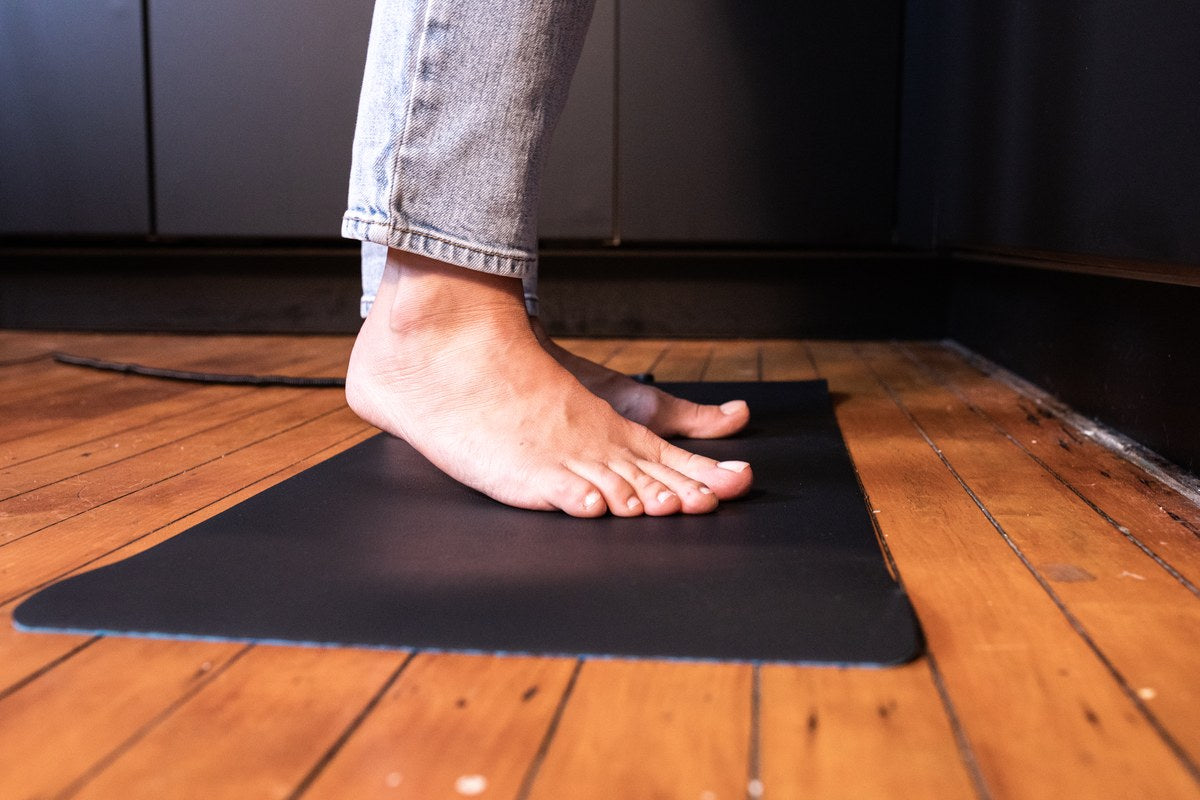
Grounding mats ground you at your desk, under your feet on the couch, or wherever you spend your daytime hours.
Grounding accessories including bands, patches, and pillow covers extend the connection to travel, work, and targeted areas.
Check your outlet with an inexpensive tester before you start. It takes a few seconds and confirms the connection is grounded.
Why the Source Matters
As grounding has grown in popularity, so have the number of products on the market. But not all grounding products are backed by the same research or engineering. Earthing.com was founded by Clint Ober, the pioneer who introduced modern earthing to the world. Many of the landmark studies on grounding trace back to the work he championed, making Earthing.com the original source behind the science, not simply another company selling grounding products.
Frequently Asked Questions
What are the main health benefits of grounding?
Research links grounding to improved sleep and cortisol rhythm, reduced inflammation and pain, better blood flow through increased red blood cell surface charge, greater heart rate variability, improved mood, and faster recovery from physical exertion.
How long before I notice benefits?
Sleep changes often show up within the first week. Circulation and nervous system effects begin within minutes of contact but take consistent grounding to become noticeable in daily life. Reduced stiffness and steadier energy usually build over two to four weeks.
Do I have to go outside to get these benefits?
No. Indoor earthing products deliver the same connection through your home's grounding system. Outdoor barefoot contact is wonderful when you can get it, and indoor earthing products are what makes the practice sustainable year-round.
Is grounding safe for everyone?
For healthy adults using a properly grounded outlet, earthing products are safe and gentle, and no electricity enters your body. If you have a pacemaker or take blood-thinning medication, speak with your doctor first, as you would before starting any new wellness routine.
Which grounding product should I start with?
Most people start with the earthing mattress cover because sleep offers the longest daily window of contact. An earthing universal mat is the natural second piece for daytime hours at a desk or on the couch.
Start With One Night
The benefits above are well documented: deeper sleep, warmer hands, a calmer nervous system, less stiffness, and faster recovery. These are the quiet improvements that shape how you feel each day whether you wake restored, energized, and ready to embrace life. The Earth has been offering them all along. Explore Earthing.com's grounding collection and reconnect tonight.


Leave a comment
This site is protected by hCaptcha and the hCaptcha Privacy Policy and Terms of Service apply.