

Anyone can ground once. You kick off your shoes at a park, stand on the grass for twenty minutes, feel pleasant, and go home. Nice, but that is a moment, not a practice.
The people who talk about grounding as something that changed their life are describing something else. They ground every day, usually while they sleep, and the effects compound. Ask them what happened and they rarely point to a single dramatic morning. They describe a slow accumulation, a body that stopped fighting them.
Here is what daily grounding does, roughly in the order most people experience it.
The First Night
Your body responds to the earth immediately. Researchers measuring skin conductance have recorded changes within one or two seconds of the connection being made, before the participant knows anything has happened. Your nervous system registers the ground faster than your conscious mind does.
That first night, the most common report is falling asleep faster. Some people describe a sinking, heavy sensation, the kind you get lying on warm sand. Others notice a light tingle in their feet or legs that fades within a few minutes.
A minority feel something less pleasant. Mild aching, unusual tiredness, or restlessness for the first several nights shows up often enough that it deserves mentioning, and it typically settles within a week as the body adjusts. Shorter sessions during the day, building up gradually, smooth the transition.
Some people feel nothing at all on night one. That is the most common experience, and it says nothing about whether grounding is working for you.
Week One: Sleep
Sleep is where daily grounding shows its hand first, and there is a hormonal reason.
Cortisol should peak in the early morning and bottom out at night. Modern life scrambles that curve, leaving people wired at eleven and foggy at seven. In the original earthing sleep study, participants who slept grounded showed cortisol shifting back toward its natural pattern over eight weeks, and reported falling asleep faster, waking less through the night, and feeling more rested.
By the end of the first week, most people who ground nightly notice one of three things. They fall asleep sooner. They stop waking at the same time every night. Or they wake up feeling like they actually slept, which is a different sensation from simply having been unconscious for eight hours.
Nighttime grounding delivers the longest uninterrupted contact you can get. A grounding mattress cover turns those hours into continuous connection during the exact window your body reserves for repair.
Weeks Two and Three: Stiffness and Aches
The inflammation changes take longer to feel, because inflammation resolves on a slower clock than sleep hormones.
Chronic low-grade inflammation is the background hum behind most everyday aches, the stiff first ten minutes of the morning, the knee that complains on stairs, the shoulder that never fully forgives an old injury. Free radicals drive that process, and they are unstable because they are missing electrons. The earth supplies electrons without limit, and grounding delivers them into your tissue where the radicals are waiting.
Researchers reviewing this work in the Journal of Inflammation Research described the electron transfer as a credible anti-inflammatory mechanism, and pointed to thermal imaging studies where inflammatory hot spots cooled and faded over weeks of consistent grounding.
Around week two or three, this shows up as an overall improvement. You get out of bed and skip the stiff shuffle to the kitchen. You realize you have not thought about your lower back in days. Nobody notices the exact morning a pain stops. You notice a week later that it is gone.
Weeks Three and Four: Calm and Energy
Two changes tend to arrive together in the second month, and both trace back to your nervous system.
Grounded participants in heart rate variability studies showed a measurable shift toward parasympathetic tone, the rest-and-repair side of the autonomic nervous system. A body idling in that mode digests better, recovers better, and reacts to stress with less intensity.
People describe this as a shorter fuse getting longer. The traffic jam still happens, the email still lands, and something about your response to it has changed. Research on mood found that even a single hour of grounding produced measurable improvements in emotional state, and daily practice appears to give that effect somewhere to accumulate.
The energy change comes from the same place plus better circulation. Grounding raises the surface charge on red blood cells, which keeps them from clumping and lets them move freely through the smallest vessels. More oxygen delivered, more waste carried away. The three o'clock crash softens, and evenings stop feeling like something you have to survive.
Month Two and Beyond: The New Baseline
The interesting thing about long-term grounding is that people stop noticing it.
The benefits become your normal. You sleep well because that is what you do now. Your joints work because that is how they feel. The practice fades into the background exactly the way good health should.
The moment most people realize how much it was doing is when they stop. A week away from home, a hotel bed, a mattress cover left behind. They sleep worse, wake stiffer, and feel the difference sharply enough that a travel grounding mat goes into the suitcase for the next trip.
Grounding is a complementary wellness practice that supports your body's natural balance. It belongs alongside good sleep habits, movement, nutrition, and medical care rather than in place of them.
How to Build the Daily Habit
Consistency beats intensity, and the easiest habits are the ones that require no willpower.
Start with sleep. A grounding mattress cover works while you are unconscious, which makes it the only wellness practice with a zero percent chance of being skipped because you were busy. Lay it over your mattress, put your fitted sheet on top, plug the cord into the grounding port of a nearby outlet, and you are done deciding.
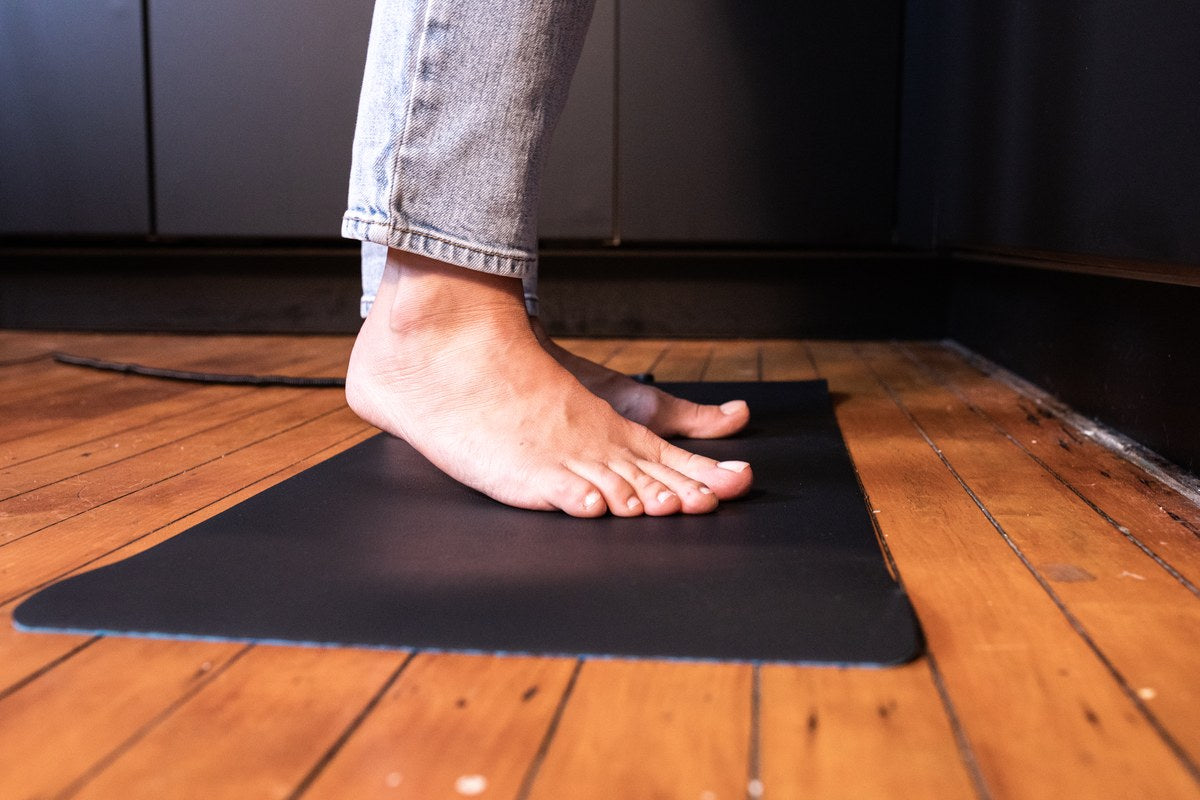
Add a daytime layer where you already sit still. Under your desk, beside the couch, wherever you spend an hour without moving. A grounding mat asks nothing of your schedule.
Extend it with grounding accessories such as body bands, patches, and pillow covers for travel or for targeting a specific area.
Keep the outdoor version too. Twenty minutes barefoot on morning grass is free, and it is the version your body was designed around.
Test your outlet with a plug-in checker before your first night. It takes seconds and confirms the grounding port is wired and live.
Frequently Asked Questions
How many hours a day should I ground?
More contact time generally produces more benefit. Sleeping grounded gives you seven to nine hours without effort, which is why it is the anchor of most daily routines. Thirty minutes on a mat or outdoors is a solid additional session.
How long until daily grounding works?
Sleep changes commonly appear in the first week. Reduced stiffness and aches typically build over two to three weeks. Calmer stress response and steadier energy usually settle in around weeks three and four. Individual timelines vary.
Can I ground too much?
There is no known upper limit. You are connecting to the same electrical potential you would have standing outside, and humans lived in continuous contact with the ground for most of history. Some people feel a brief adjustment period when starting, which shorter early sessions can ease.
What happens if I skip a few days?
Nothing dramatic, and the benefits fade gradually rather than vanishing. Most people who take a break notice their sleep and stiffness drifting back toward the old baseline within a week or two, which is usually what convinces them the practice was working.
Is sleeping grounded better than daytime grounding?
Both help. Sleep simply gives you the longest continuous window of contact during the hours when your body does its deepest repair, which is why nighttime grounding produces the most consistent reports.
Give It a Month
One session feels pleasant. A month of daily grounding rewrites your baseline for sleep, stiffness, calm, and energy. The difference between those two outcomes is nothing but consistency, and the easiest way to be consistent is to do it while you sleep.
Explore Earthing.com's grounding collection, set up your connection tonight, and find out what daily contact with the earth does for you.


Leave a comment
This site is protected by hCaptcha and the hCaptcha Privacy Policy and Terms of Service apply.