
A grounding product doesn't come with a countdown clock.
There's no moment when it turns exactly two years old and quietly stops conducting. One person may use a sleep product every night with very little wear, while someone else exposes the same surface to more friction, sweat, lotion, cleaning products, and midnight tossing and turning.
That's why "how many years does a grounding sheet last?" is slightly the wrong question. The better one is this:
Is the conductive surface still intact, and does the product still test as conductive?
Those are the things that actually decide whether it's time for a replacement.
Earthing's current guidance doesn't give its Sleep Mat or Mattress Cover a fixed two-, three-, or five-year expiration date. Instead, it asks you to watch the condition of the conductive surface, care for it correctly, and verify conductivity with the Product Tester. Earthing also recommends discontinuing use if the conductive surface becomes significantly flaked or deteriorated. Earthing
That makes lifespan something you measure by condition and function, not by age alone.
Grounding Products Wear Because They Are Contact Surfaces
Think about what happens to a sleep product over hundreds of nights.
Your body moves across it. Your weight presses into it. Skin oils transfer onto it. You perspire. Fabric slides over the surface. The same areas take pressure night after night. Then the product is cleaned, dried, stretched back over the mattress, and used again.
None of that means something is wrong with it. It's simply normal mechanical wear. Earthing specifically says the conductive surface of its current Mattress Cover, Sleep Mat, and Pillow Cover can begin to flake or wear over time because of sweat, tossing and turning, friction, and repeated use. Earthing
So the goal isn't to keep a grounding product looking factory-new forever. The goal is to tell harmless aging apart from the kind of deterioration that affects the conductive surface.
A Warranty Is Not the Same Thing as a Lifespan
This distinction saves a lot of confusion.
Earthing currently provides a one-year manufacturer's warranty for defects on most non-clearance products. Earthing
That does not mean the product is expected to last only one year. A warranty tells you how long the manufacturer covers qualifying defects. Lifespan tells you how long a particular item stays usable under real conditions. Those are different questions.
A product can keep working well past its warranty. Equally, something can develop a manufacturing problem during the warranty period that ordinary wear shouldn't have caused. Earthing's FAQ reflects that difference: if substantial flaking occurs within one year, the company asks customers to contact support with their order information and photos so the issue can be reviewed. Outside that window, normal replacement becomes the customer's responsibility. Earthing
So don't glance at the warranty end date and assume your grounding product has somehow expired. Test it. Look at its condition. That tells you far more.
The Conductive Surface Is the Part That Matters
Earthing's current Sleep Mat and Mattress Cover use a proprietary carbon-based conductive surface rather than relying on an ordinary piece of bedding. Earthing
That conductive layer is what your body needs to connect with. As long as the surface stays sufficiently intact, the cord and connection are working, and the product tests conductive where you actually use it, it's still doing its electrical job.
This is why cosmetic aging and electrical failure shouldn't automatically be treated as the same thing. A little visible wear doesn't necessarily mean the whole mat has suddenly gone non-conductive. At the same time, severe peeling, flaking, cracking, or deterioration shouldn't be waved away just because some areas still look fine. Earthing's own guidance says to discontinue use if the conductive surface is significantly deteriorating. Earthing
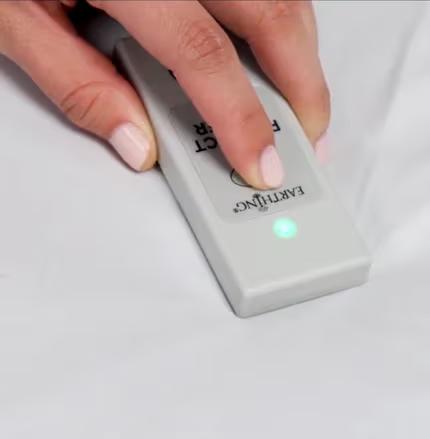
The Product Tester gives you the second half of the answer. Appearance tells you what the surface looks like. Testing tells you whether it still conducts.
Test More Than One Area
One of the most useful things about the Product Tester is that it can reveal localized wear.
Earthing's troubleshooting instructions specifically recommend moving the tester to a different area of the product if it fails in one spot. If the tester reads conductive in one area but not another, Earthing says there may be wear in the product. Earthing
That matters because wear doesn't always happen evenly. Picture the section of a Sleep Mat your torso rests on every night. It may take far more pressure and friction than a corner that barely gets touched. A desk mat can develop a similarly concentrated wear pattern where your heels or the balls of your feet keep landing.
So testing one pristine corner and getting a green light doesn't necessarily tell you everything about the zone your body actually uses. Test the contact area too. That turns lifespan into something measurable rather than something you estimate from the purchase date.
Do Not Replace a Product Before You Rule Out the Cord
A failed test can lead to a very expensive misunderstanding.
The tester doesn't light. You assume the mat has died. You replace the whole product. Then it turns out the problem was a cord.
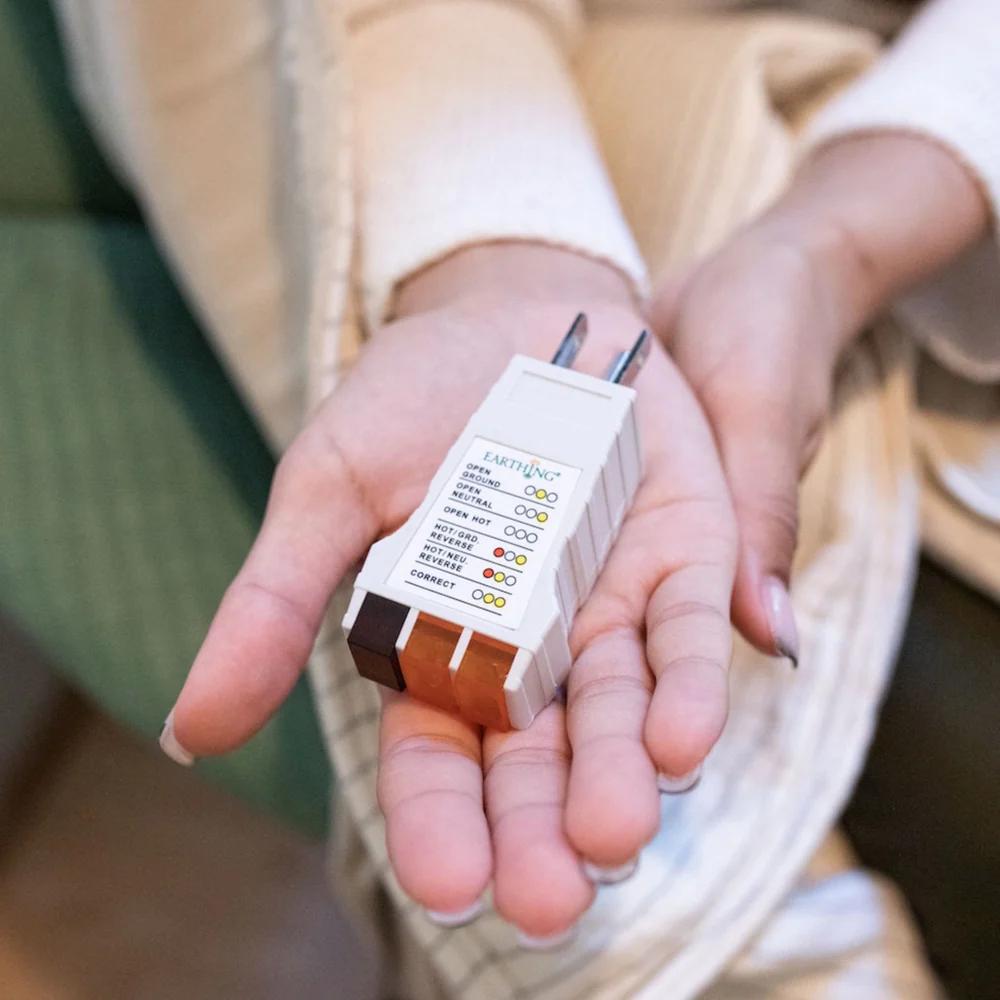
Earthing's troubleshooting instructions specifically tell users to confirm the tester battery is working, make sure the tester is contacting the surface properly, verify that the Coil Cord is fully connected, move to another part of the product, and try another cord if one is available. Earthing
That sequence matters, because the grounding pathway has several links. The outlet has to provide a ground. The Safety Adapter has to be connected correctly. The Coil Cord has to conduct. The product has to conduct. The tester has to work, and it has to make proper contact with the surface. If any one of those fails, the result can look exactly like a dead grounding product.
So before you decide your sheet or mat has reached the end of its life, find the actual failure. That can spare you from replacing a perfectly good product.
Cleaning Can Either Extend or Shorten Its Useful Life
A grounding product is one of those rare items where cleaning it correctly helps preserve performance, and cleaning it incorrectly can do real damage.
Earthing recommends wiping its current carbon-based products regularly with a damp cloth to prevent skin-oil buildup. For deeper cleaning, the company recommends mild soap and water followed by a second wipe with clean water so no soap residue stays on the conductive surface, then air drying. Earthing
That helps, because buildup itself can interfere with good contact.
But the wrong products create the opposite effect. Earthing warns against bleach, chlorine, disinfectants, whitening agents, oils, and harsh cleaners because they can damage conductivity, and its current mats and covers should never go in a washing machine or dryer. Earthing
Which means two identical products bought on the same day can age very differently. One is gently cleaned and kept free of residue. The other meets body oil every night, gets sprayed with household cleaner, and eventually takes a spin through the washing machine. Same chronological age. Very different functional age.
Lotions and Oils Can Accelerate Problems
Cleaning is only half of product care. What reaches the surface between cleanings matters too.
Earthing advises against applying creams, lotions, or body oils right before contact with its conductive mats, because those substances can build up and damage conductivity over time. Earthing
That doesn't mean an occasional trace of moisturizer ruins anything. It means repeated exposure adds up. Someone who applies a rich body oil every night and immediately lies against the same section of conductive material is creating a different environment from someone whose clean skin touches it directly.
The effect is gradual, which is exactly why it slips by unnoticed. Months later, the product may look slightly different, feel slightly coated, or become harder to test consistently. Which is why no universal lifespan number exists. How you use the product changes how it ages.
Friction Is the Other Major Variable
A sleep surface gets rubbed. There's no way around that.
You roll from one side to the other. Your fitted sheet shifts. Your feet drag. Your body presses down, then moves. Earthing explicitly names tossing, turning, repeated use, sweat, and friction as contributors to normal wear and flaking. Earthing
Some people naturally move more in their sleep than others. A heavier person may place different mechanical loads on the surface than a lighter one. A Universal Mat under bare feet may take thousands of small movements across the same small area.
None of this means you need to baby the product. It's designed to be used. But expecting any contact surface to take years of nightly friction without ever showing wear isn't realistic. The useful question is whether that wear has reached the point where conductivity or physical integrity is compromised.
A Fitted Sheet May Change the Wear Pattern
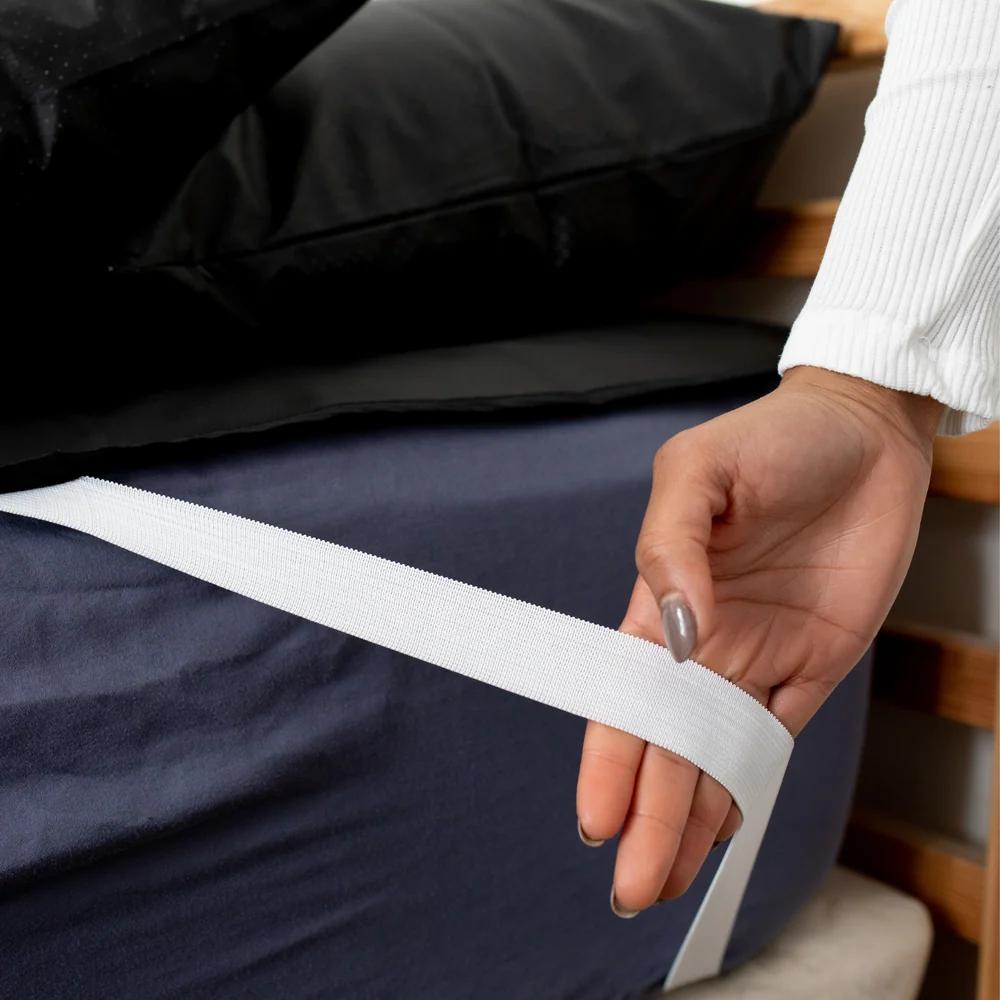
Earthing allows its Sleep Mat and Mattress Cover to be used beneath an appropriate fitted sheet. Direct skin contact provides immediate grounding, but Earthing says a cotton, bamboo, or suitable cotton-blend fitted sheet can become conductive enough as body moisture builds. Fully synthetic sheets aren't recommended. Earthing
That layer also changes how your body physically interacts with the conductive surface. Rather than skin sliding directly across it, the fitted sheet takes some of the friction.
That doesn't make the underlying product immune to wear. The sheet still moves, pressure still transfers through it, and moisture still reaches the surface. But it helps explain why two people with the same model can see different wear patterns depending on how they've set things up.
Again: lifespan depends on use.
Older Silver-Thread Grounding Sheets Are a Different Product
The phrase "grounding sheet" adds one more complication, because not every grounding product is built the same way.
Many older grounding sheets and some other conductive textile products use silver fibers woven through fabric. Earthing's current primary sleep products use its carbon-based conductive material instead. Earthing
Those two constructions don't necessarily age alike. A carbon surface may visibly wear or flake. A conductive textile can lose conductivity as its fibers wear, get damaged, or collect residue.
So a lifespan estimate that was accurate for an older silver-thread sheet shouldn't automatically be applied to a current Mattress Cover or Sleep Mat. If you own an older product, identify exactly which model and material you have before deciding whether age alone means it should be replaced.
The testing principle still applies. Function beats guessing.
Signs That It Is Time to Investigate Replacement
You don't need to replace a product over a minor cosmetic mark. But some signs deserve a closer look.
Significant flaking or deterioration of the conductive surface is one. Inconsistent testing, where heavily used sections no longer conduct while other areas still do, is another. So is a failure to test conductive after you've already ruled out the outlet, adapter, tester battery, connection, and Coil Cord.
Earthing's current guidance specifically recommends discontinuing use when the conductive surface has significantly deteriorated. Earthing
That's far more useful than tossing the product every few years whether it works or not. Replace it because it has reached the end of its functional life, not because a calendar said so.
Do Not Use Sensation as a Lifespan Test
This one is especially easy to fall into after you've been grounding for a while.
Maybe you noticed a real difference when you first bought the product. Months later, you don't notice it anymore. It's tempting to conclude the product has stopped working.
That doesn't establish anything electrically. Earthing itself states that it guarantees the grounding connection but doesn't guarantee how any individual will respond to grounding. Earthing
Your subjective experience can shift for countless reasons. The product's conductivity is something you can actually measure. Those are different questions.
If the tester shows a solid conductive connection in the area you use, no longer feeling a particular sensation doesn't prove the product needs replacing. And feeling wonderfully relaxed on an old mat doesn't prove a worn conductive surface still works. Use the tester for the electrical question.
There Is No Need to Replace a Working Product "Just in Case"
Grounding products aren't like disposable filter cartridges with a preset service interval.
Earthing's current guidance doesn't say to discard a Sleep Mat after a specific number of months or years. Instead, the company gives you maintenance instructions, a Product Tester, troubleshooting steps, and guidance around significant surface deterioration. Earthing
That adds up to a much better replacement strategy. Keep using the product while it stays physically serviceable and reliably conductive. Care for it properly. Test it periodically. And replace it when the evidence tells you the conductive surface is no longer doing its job.
That approach avoids both extremes. You're not replacing perfectly good products for no reason, and you're not sleeping on a visibly deteriorated mat for years just because it still looks mostly intact.
How Often Should You Test It?
Earthing doesn't publish a mandatory testing schedule that says every product must be tested every thirty, sixty, or ninety days, so there's no reason to invent one.
A sensible rhythm: test when you first set the product up, so you know it works. Test again whenever the setup changes. Test if you notice visible wear. Test after anything happens that could have affected the product. And test periodically if it's been in heavy use for a long time and you simply want reassurance that the pathway is still intact.
The Product Tester exists precisely so you don't have to guess. Earthing
The older the product gets, the more that little green light earns its keep.
Frequently Asked Questions
How Many Years Does a Grounding Sheet Last?
There's no single lifespan that fits every grounding product or every user. Earthing's current guidance doesn't set a fixed expiration date for its Sleep Mat or Mattress Cover. Wear depends on friction, sweat, cleaning, residue, and frequency of use, so conductivity and physical condition are better replacement criteria than age alone. Earthing
Does the One-Year Warranty Mean It Only Lasts One Year?
No. Earthing's one-year warranty covers qualifying manufacturer defects; it isn't a stated one-year product lifespan. Earthing
Is Flaking Normal?
Some wear and flaking can develop with repeated use. Earthing attributes this to factors including sweat, friction, tossing and turning, and everyday use. Significant deterioration is a reason to stop using the product. Earthing
Should I Replace My Grounding Product If the Tester Does Not Light?
Not right away. First verify the tester battery, connections, Coil Cord, Safety Adapter, and the contact between the tester and the product. Test another area of the surface and, if possible, try another Coil Cord. Earthing
Can One Part of a Grounding Mat Wear Out Before Another?
Yes. Earthing's tester instructions specifically say that if the tester works in one area but not another, there may be localized wear. Earthing
Can Incorrect Cleaning Shorten the Life of a Grounding Product?
Yes. Harsh chemicals, bleach, oils, disinfectants, machine washing, and other unsuitable methods can damage the conductive material. Earthing recommends mild soap and water for its current carbon-based mats and covers. Earthing
Can Lotion Damage a Grounding Mat?
Repeated lotion, cream, or body-oil exposure can build up and affect conductivity over time. Earthing recommends avoiding those products right before direct contact with the mat. Earthing
How Do I Know When It Really Needs Replacing?
If the conductive surface is significantly deteriorated, or the areas you use no longer test conductive after the rest of the grounding system has been ruled out, it's time.
Replace Based on Evidence, Not Age
The most useful thing you can do for the lifespan of a grounding product is stop thinking of it as having a fixed expiration date.
It's a conductive contact surface. It wears according to how it's used. Keep it clean without attacking it with harsh chemicals. Keep heavy oils and residue away from it when you can. Treat the cord and connectors with care. Watch for substantial physical deterioration. And most importantly, test it.
If the conductive surface is still intact and the area you use gives the expected reading, there's little reason to replace a working product just because another anniversary has come around. If the surface is significantly deteriorating, or fails testing after the rest of the connection has been ruled out, age stops mattering in the other direction too. At that point the product has answered the question for you.
When that day comes, the current Earthing Sleep Mat, Mattress Cover, and Universal Mat are ready, and the Product Tester will tell you, plainly, when it hasn't arrived yet.

Leave a comment
This site is protected by hCaptcha and the hCaptcha Privacy Policy and Terms of Service apply.