
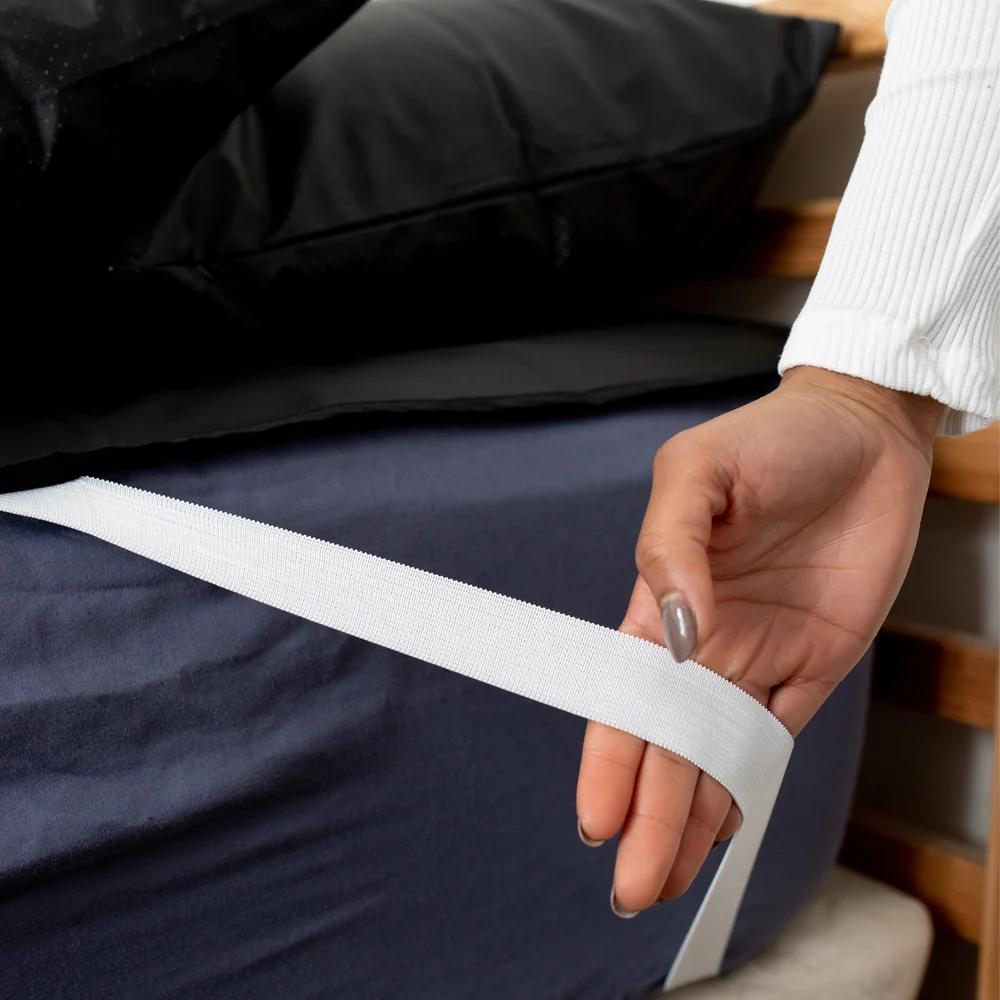
A grounding product can look perfectly fine and still become less conductive over time if it's cleaned the wrong way. That's what makes caring for it different from caring for ordinary bedding.
With a normal sheet, the only real question is whether it looks and smells clean. With a conductive product, you also have to protect the material that actually carries the connection.
Skin oils build up. Lotion transfers onto the surface. Soap residue lingers. Harsh cleaners can damage conductive materials. Fabric softener leaves coatings behind. And the wrong washing method can shorten the life of a product that could otherwise have lasted much longer.
Before we go any further, one important wrinkle: not every Earthing product is cleaned the same way.
Earthing's current Sleep Mat, Mattress Cover, Universal Mat, and Pillow Cover use a carbon-based conductive surface and should not go into a washing machine or dryer. Some textile Earthing products, like the Earthing Throw with its conductive silver threads, are washable and follow completely different instructions.
So the first rule of caring for any grounding product isn't "wash it gently." It's know which product you actually own before you wash anything.
Why Cleaning Matters for Conductivity
The conductive surface is where your body makes the connection, and every night or every workday, that surface meets whatever is on your skin: natural oils, sweat, moisturizer, hand cream, hair products, and ordinary household residue.
A little is unavoidable. Over time, though, buildup can form a layer between your body and the conductive material underneath. That's why Earthing specifically recommends regularly wiping down its current carbon-based mats and covers to prevent skin-oil buildup and keep conductivity strong. Earthing
This flips a common assumption. Cleaning here isn't just cosmetic. Done well, it preserves the electrical function of the product. Done badly, it can damage the very thing you were trying to protect.
Current Earthing Sleep Mats and Mattress Covers Should Not Be Machine Washed
This is the single biggest thing to get right.
Earthing's current Sleep Mat and Mattress Cover are made with the company's proprietary carbon-based conductive material. They aren't conventional fabric sheets with conductive thread woven through them.
Earthing's current instructions say these products should be wiped clean rather than placed in a washing machine, and the company specifically warns against the dryer too. Earthing
So your usual bedding instincts don't apply. You don't strip the bed, toss the conductive mat in with the sheets, add detergent, and run a cycle. You clean the surface while keeping the product intact.
For routine cleaning, a damp cloth is enough. For a deeper clean, Earthing recommends a small amount of mild household soap on a damp cloth or sponge, followed by a pass with a separate clean, damp cloth to lift off the soap residue. Then let the product air dry completely before using it again. Earthing
Simple wins here. The less chemistry involved, the less there is to interfere with the conductive surface.
Soap Residue Matters More Than You Might Expect
Using mild soap is fine. Leaving the soap behind is not.
Earthing's setup guidance specifically warns that buildup on the surface can interfere with conductivity, which is exactly why that second wipe with plain water matters. Earthing
Think of cleaning in two stages: the first pass lifts oils and dirt, the second removes the cleaner itself. If you keep adding soap without properly removing it, you slowly trade one kind of residue for another.
That's why more detergent isn't better. You're not disinfecting a hospital floor. You're keeping a conductive contact surface clean without coating it or chemically attacking it.
What You Should Never Use on a Carbon-Based Earthing Product
Harsh cleaners are where avoidable damage happens.
Earthing currently warns against bleach, chlorine, disinfectants, whitening agents, oils, and harsh household chemicals on its carbon-based products. Earthing
The reason is simple: the conductive surface is functional material, not decorative upholstery. Products designed to brighten, coat, polish, soften, disinfect, fragrance, or protect ordinary household surfaces can leave films behind or damage the conductive layer.
That includes the cleaners people reach for on autopilot when they see a dark mat and assume it can be treated like a vinyl chair. It can't. Earthing specifically warns against furniture polish and similar household treatments because they can interfere with conductivity. Earthing
If you're wondering whether some elaborate cleaner is safe, that's usually a sign you don't need it. Mild soap and water do the job.
Lotions, Creams, and Body Oils Can Create Their Own Problem
The cleaning story actually starts before you clean anything, because what's on your skin matters too.
Earthing advises against applying lotions, creams, and body oils right before direct contact with its mats and covers, since repeated exposure can build up on the conductive surface and affect performance over time. Earthing
That doesn't mean giving up your night cream. It means keeping heavier skincare away from the contact area when you can.
If you use body lotion before bed, give it time to absorb before you settle onto the Earthing surface. If you use oils generously on one part of your body, make another area your main contact point. And if a mat lives under bare feet every day, regular wiping earns its keep, because feet naturally carry oils, sweat, and whatever they picked up from floors and shoes.
This is maintenance, not something to obsess over. The goal is simply not to let months of buildup sit untouched.
How Often Should You Clean a Sleep Mat or Mattress Cover?
Earthing says its carbon-based products should be wiped down regularly to prevent buildup, but there's no universal calendar that fits everyone. Earthing
Someone using a mat under bare feet for eight hours at a desk may need to clean it more often than someone whose mat sits under a thin fitted sheet. Someone who sleeps hot and sweats heavily may leave more surface residue than someone who doesn't. Direct skin contact generally means more transfer of oil and sweat.
A practical approach is to look the surface over as part of your normal bedding or room routine. If it looks or feels oily, dirty, tacky, or noticeably different from when it was new, clean it. You don't have to wait for visible grime.
At the same time, there's no reason to scrub it hard every day. Gentle, regular upkeep beats infrequent heavy cleaning.
Disconnect the Product Before Cleaning It
Clean with the product disconnected. Unplug the grounding cord and clean the mat or cover on its own.
You don't need the product connected to earth while you wipe it down, and there's no benefit to having cords attached while moisture is involved. Once the surface is clean and completely dry, reconnect it as usual.
This is also a nice moment to glance over the cord, connector, and conductive surface instead of leaving the whole setup permanently hidden under the bedding. Small checks catch the gradual wear you'd otherwise miss.
Let It Air Dry Completely
Don't rush this part with high heat.
Earthing's current care instructions specify air drying for its mats and covers and warn against using a dryer. Earthing
You don't need a hair dryer, heater, radiator, or any other concentrated heat source either. Wipe away excess moisture and let the air do the rest. The cleaning process uses very little water anyway, so drying is rarely complicated.
Once the surface is fully dry, reconnect and carry on.
The Earthing Throw Is Different
Here's where product-specific instructions really matter.
The Earthing Throw contains conductive silver threads woven into a textile surface. Unlike the current carbon-based Sleep Mat and Mattress Cover, Earthing says the Throw can be machine washed.
The official instructions recommend warm water at roughly 105°F (40°C) and suggest that regular users wash it at least twice a month, because washing removes sweat and natural skin oils from the silver and helps preserve conductivity. Earthing
The Throw can then be dried on low heat, though line drying is preferred. Earthing
So two products from the same brand can have almost opposite care instructions. The Sleep Mat should never see the inside of a washing machine. The Throw is meant to be washed.
That's why generic "how to wash a grounding sheet" advice can lead you astray. You need instructions for the specific conductive construction you own.
Fabric Softener Is One of the Biggest Problems for Conductive Textiles
For conductive textiles with silver threads, fabric softener is a particular troublemaker.
Softeners work partly by leaving a coating on textile fibers, which is exactly what you don't want on conductive thread. Earthing's Throw instructions say not to use liquid fabric softeners or dryer sheets. Earthing
The same instructions warn against bleach, whitening detergents, oxygen-style whitening detergents, and detergents containing oils such as lavender or coconut oil. Earthing
The principle matches the carbon products even though the method differs. Keep the conductive material clean. Don't coat it. Don't aggressively oxidize or chemically attack it. And don't assume that something marketed as wonderful for ordinary fabric is automatically fine for conductive fabric.
Silver Threads and Carbon Surfaces Fail Differently
This distinction helps when you're thinking about long-term care.
A conductive textile depends on the integrity of the conductive fibers woven through it. Those fibers can become coated, oxidized, physically worn, or damaged by unsuitable laundry products.
A carbon-based mat uses a conductive surface layer instead. That surface can collect oils or soap, and repeated friction can eventually cause visible wear or flaking. Earthing says some flaking or wear can occur over time from sweat, movement, friction, and repeated use, and recommends discontinuing use if significant deterioration occurs. Earthing
So although both products do the same basic job, their maintenance problems aren't identical. That's one more reason not to copy care instructions from one product onto another.
Do Not Judge Conductivity by Appearance Alone
A grounding product can look clean and still need testing. It can also show cosmetic wear while parts of the surface remain conductive.
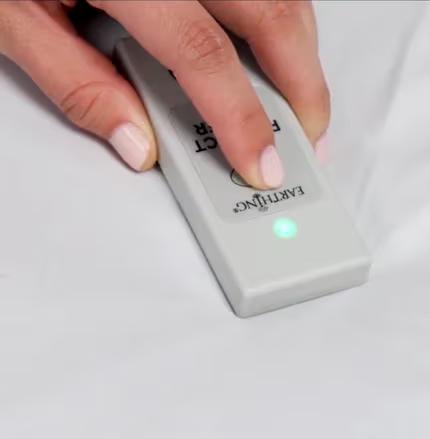
Appearance is useful for spotting obvious deterioration, but it isn't a substitute for electrical verification. Earthing's Product Tester is designed to confirm whether the conductive surface is still doing its job, and the current tester instructions say a solid green light means the tested surface is conductive and ready for use. Earthing
If you use a fitted sheet over a grounding product, Earthing recommends adding a drop of water to the sheet when testing through it, to simulate the moisture your body naturally creates over time. Earthing
Testing becomes especially useful as a product ages. Instead of wondering whether years of cleaning, friction, or skin oils have worn down the conductivity, you can simply check. That's far more reliable than deciding whether the product still "feels" like it works.
If a Product Stops Testing Correctly, Do Not Immediately Replace It
A failed test doesn't automatically mean the conductive surface is finished. There's an entire chain between the earth and your body.
The outlet can be the problem. The Safety Adapter can be disconnected. The Coil Cord can loosen or fail. The snap connection can be incomplete. The Product Tester itself can have a weak battery or poor contact with the surface. Earthing's troubleshooting guidance recommends working through those possibilities before concluding the product has failed. Earthing
That's especially relevant right after cleaning. If the product worked yesterday, you wiped it down today, and suddenly the tester doesn't respond, first make sure the surface is fully dry and everything has been reconnected properly. Don't leap to the conclusion that mild soap somehow destroyed it. Work through the chain, one link at a time.
Be Careful With Advice for Older Grounding Sheets
The grounding market has changed over the years.
Older products were often actual fabric sheets containing conductive silver fibers. Earthing's current sleep products are predominantly carbon-based mats and covers. That means an old care guide telling you to machine wash a grounding sheet may have been perfectly correct for the product it described, and completely wrong for the one on your bed today.
If you own an older Earthing sheet or another discontinued textile product, follow the care label and instructions that came with that specific item rather than applying the current Mattress Cover instructions. If those instructions are long gone, contact the manufacturer with the specific product name before washing it.
The worst option is assuming all conductive bedding is built the same way. It isn't.
Proper Care Is Mostly About Avoiding Unnecessary Damage
Grounding-product care doesn't need to become another complicated routine. Most problems come from a handful of predictable mistakes.
People use harsh chemicals because stronger feels cleaner. They add fabric softener because they use it on every other piece of bedding. They put a carbon mat in the washing machine because it lives on a bed and therefore feels like bedding. They use body oils nightly and never wipe the surface. Or they keep using a heavily worn product without ever testing it.
Sidestep those and maintenance becomes easy. Clean gently. Remove residue. Use only the method designed for your particular product. Let it dry properly. And test it now and then so you know the conductive pathway still exists.
Frequently Asked Questions
Can I Put an Earthing Sleep Mat in the Washing Machine?
No. Earthing's current instructions say the Sleep Mat, Mattress Cover, Universal Mat, and Pillow Cover should not go in a washing machine. Wipe them clean with a damp cloth and mild soap instead. Earthing
Can I Put an Earthing Mattress Cover in the Dryer?
No. Let current carbon-based Earthing mats and covers air dry. Earthing
What Soap Should I Use?
A small amount of mild household soap with water. Afterward, wipe the product with a separate clean, damp cloth so no soap residue stays on the conductive surface. Earthing
Can I Use Bleach?
No. Earthing specifically warns against bleach, chlorine, disinfectants, whitening agents, and harsh chemicals on its carbon-based products. Earthing
Can I Use Fabric Softener on a Conductive Throw or Sheet?
Not on the Earthing Throw. Fabric softener and dryer sheets are specifically excluded from its care instructions because coatings can interfere with the conductive silver threads. Earthing
Can I Machine Wash the Earthing Throw?
Yes. Unlike the carbon-based mats, the silver-thread Earthing Throw is designed to be machine washed in warm water at roughly 40°C. Follow the Throw's own instructions rather than applying the Sleep Mat instructions to it. Earthing
Do Lotions Affect Grounding Products?
Repeated lotion, cream, and body-oil residue can build up on the conductive surface and interfere with performance over time. Earthing recommends avoiding heavy application right before direct contact. Earthing
How Often Should I Clean My Grounding Product?
Current carbon mats and covers should be wiped often enough to prevent skin-oil buildup. What that means in practice depends on how heavily the product is used and whether bare skin touches it directly. Conductive textile products may have their own specified washing frequency.
How Do I Know Whether It Is Still Conductive?
Use the appropriate Earthing Product Tester rather than relying on appearance or sensation. A properly connected product that gives the expected tester response is a far better indicator than whether you think it "feels" different. Earthing
Take Care of the Conductive Part, Not Just the Bedding
The easiest mistake is treating a grounding product like whatever ordinary object it most resembles.
A Sleep Mat looks like bedding, so you wash it like bedding. A Throw looks like a blanket, so you add fabric softener. A Universal Mat looks tough, so you spray it with a strong household cleaner.
But these aren't ordinary fabric or ordinary mats. Their usefulness depends on the conductive material staying intact and exposed.
For Earthing's current carbon-based Sleep Mat, Mattress Cover, Universal Mat, and Pillow Cover, that means gentle wiping with mild soap and water, removing the residue, and air drying. For conductive textile products such as the Earthing Throw, it means following the specific warm-wash instructions while keeping bleach, whitening products, oils, and softeners away from the silver threads.
Different construction, different care. The principle underneath both is the same: keep the conductive pathway clean, uncovered, and undamaged.
Do that, test the product occasionally with the Product Tester, and you'll spend far less time wondering whether your cleaning routine is quietly working against the thing you bought it for.


Leave a comment
This site is protected by hCaptcha and the hCaptcha Privacy Policy and Terms of Service apply.